
Discussions in Montseny focused on strengthening research collaboration and updating priorities for mountain biosphere reserves, and renewing the 2005 GLOCHAMORE Research Strategy to address today’s rapidly evolving mountain challenges.
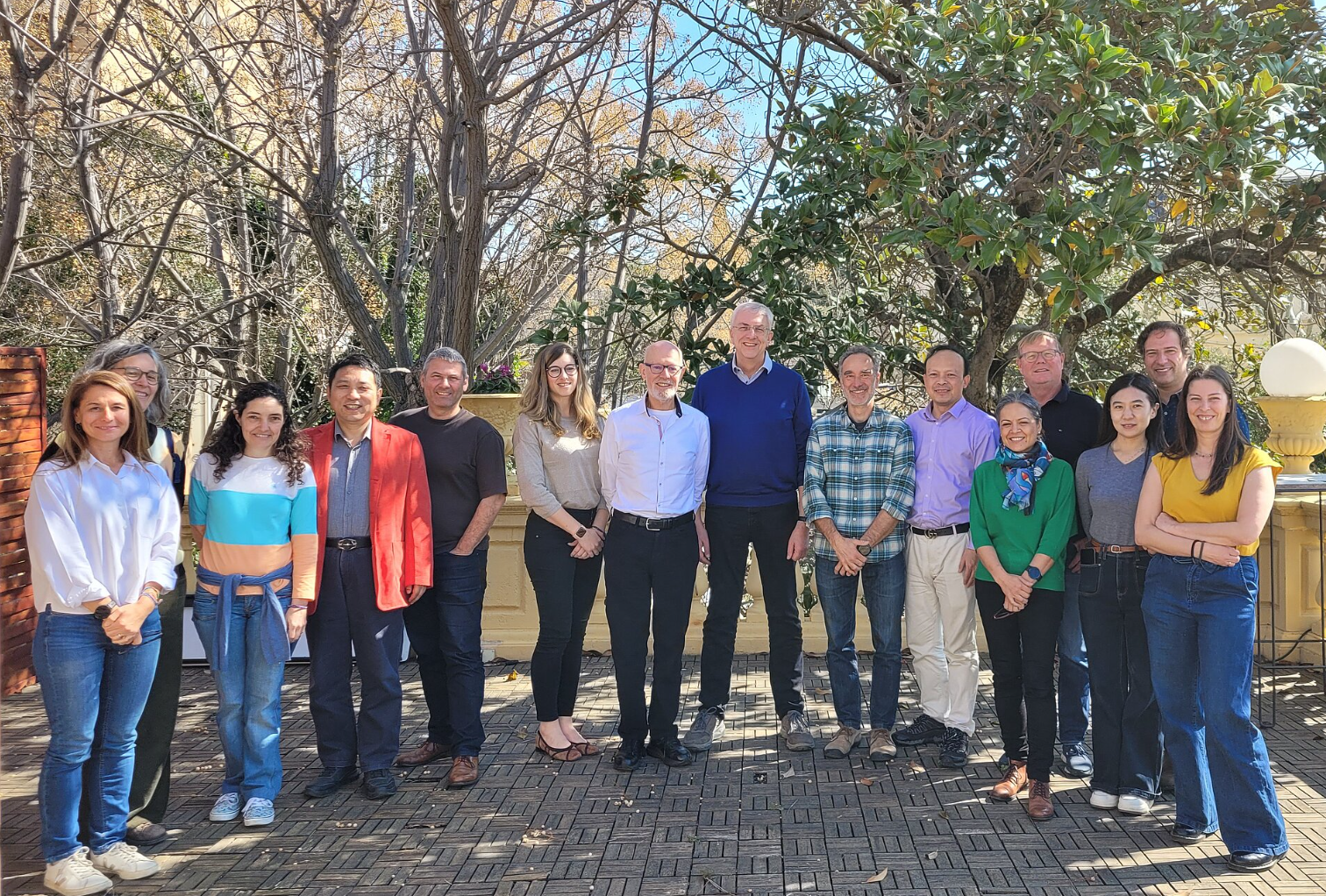
The Mountain Research Initiative (MRI) contributed to key discussions at the Technical Meeting of the World Network of Mountain Biosphere Reserves (WNMBR), held from 23–24 March 2026 at the Montseny Biosphere Reserve in Spain. MRI Executive Director Carolina Adler and Chair Jörg Balsiger represented the MRI network, engaging in strategic exchanges on the future of research and collaboration across mountain biosphere reserves worldwide.
Bringing together members of the WNMBR and its advisory bodies, the meeting focused on two main objectives: reviewing the Network’s Action Plan for the coming two years in alignment with the UNESCO Man and the Biosphere (MAB) Hangzhou Strategic Action Plan (2026–2035), and initiating a roadmap to update the Global Change in Mountain Regions (GLOCHAMORE) 2005 Research Strategy.
Revisiting GLOCHAMORE for a Changing World
A central focus of the meeting was the renewal of the GLOCHAMORE Research Strategy – more than 20 years after its original development. Established in 2003, GLOCHAMORE was a project supported by the European Commission and UNESCO-MAB, in collaboration with MRI and the University of Vienna, that aimed to define and prioritise key areas of research to better understand global change processes in mountain regions with a specific focus on applicability in mountain biosphere reserves.
The resulting 2006 GLOCHAMORE Research Strategy, informed by the experience of 20 mountain biosphere reserve managers and over 300 scientists worldwide, provided a framework for detecting and monitoring environmental change in mountain biosphere reserves and for guiding responses at local and regional scales.
At Montseny, participants took the first steps toward updating this strategy to reflect today’s challenges, including accelerating climate change, biodiversity loss, and evolving societal needs. Discussions emphasized the importance of integrating new scientific priorities, advancing monitoring approaches, and strengthening links between global research, local knowledge, and policy processes.
The MRI’s longstanding involvement in GLOCHAMORE and partnership with UNESCO MAB positioned Adler and Balsiger to contribute to these forward-looking discussions, drawing on the network’s experience in fostering global research collaboration and science-policy engagement.
Strengthening Collaboration Across Mountain Biosphere Reserves
Beyond GLOCHAMORE, the meeting provided an opportunity to align future activities of the WNMBR with broader international frameworks and to reinforce the role of mountain biosphere reserves as key sites for research, monitoring, and sustainable development.
Participants highlighted the importance of collaborative approaches that connect scientific expertise with local and Indigenous knowledge, and that support inclusive, place-based responses to global change. The discussions in Montseny laid the groundwork for continued cooperation and joint research initiatives across the Network.
Future Directions
The Technical Meeting marked an important step in shaping the future direction of the WNMBR and its research agenda. By contributing to the renewal of the GLOCHAMORE strategy and broader network planning, the MRI continues to support efforts to strengthen knowledge generation, exchange, and application in mountain regions worldwide. Through this effort, the MRI expects to broker and facilitate closer connections and collaborations between the MRI’s global research community and mountain biosphere reserves. Stay tuned for future updates.
Cover photo: UNESCO WNMBR