
Mountain research featured strongly at the European Geosciences Union (EGU) 2026 from the 3rd-8th May in Vienna through two sessions endorsed and supported by the Mountain Research Initiative (MRI), bringing together researchers from across disciplines to discuss Elevation-Dependent Climate Change (EDCC), environmental transformation, and adaptation in mountain regions.
The first session, Mountain Weather and Climate Processes, focused on advances in understanding weather, climate dynamics, and EDCC in mountain regions. Organised by the MRI EDCC Working Group, the session explored topics including mountain climate processes, cryosphere interactions, extreme events, high-resolution climate modelling, and the persistent observational gaps that limit understanding at high elevations.
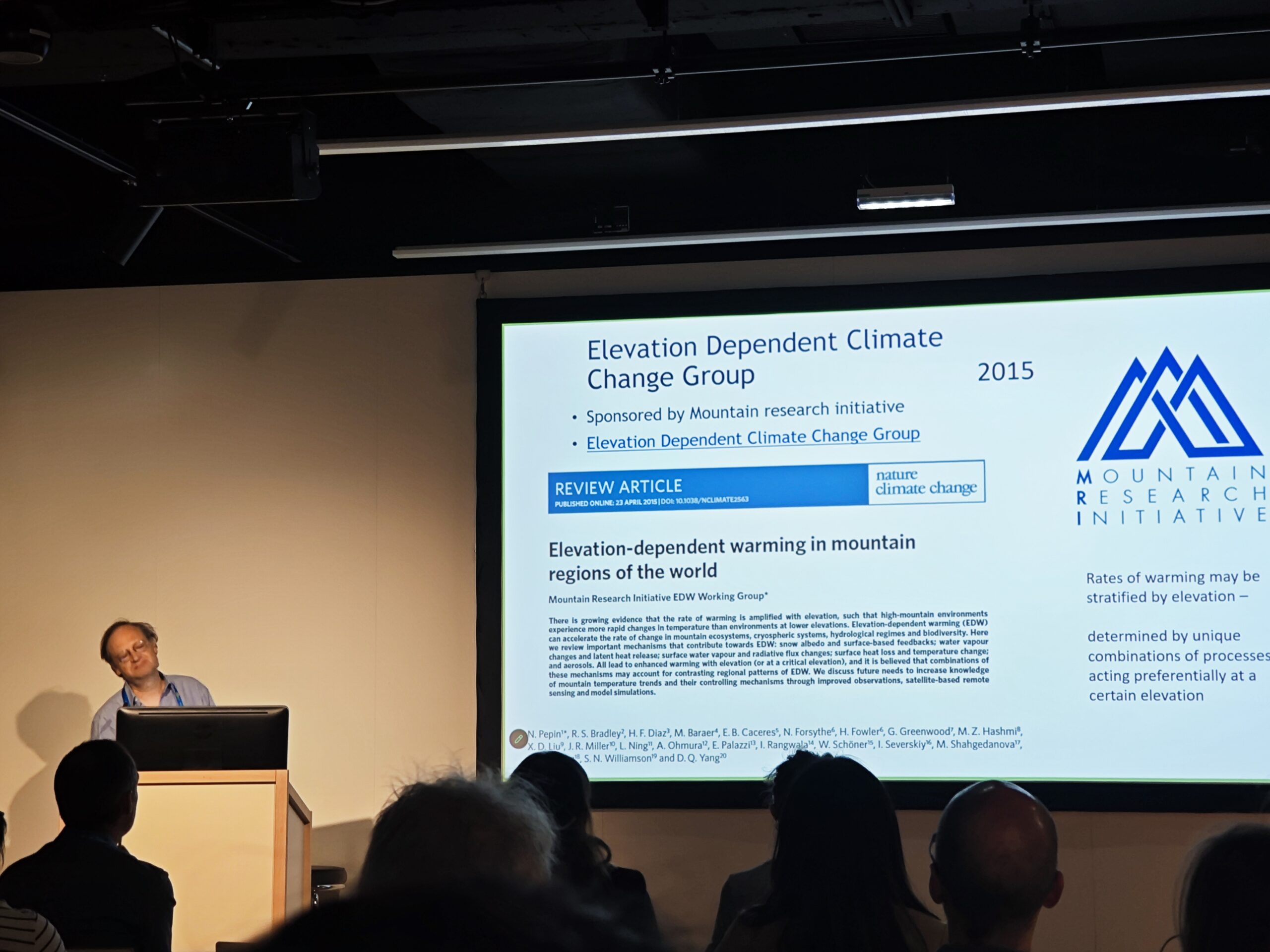
A particular highlight was the opening keynote presentation by MRI EDCC Working Group lead Nick Pepin, who reviewed more than a decade of research on Elevation-Dependent Climate Change. His presentation highlighted how warming patterns in mountains differ from broader global trends and emphasised the growing need to move beyond elevation-dependent warming alone towards a wider understanding of elevation-dependent climate change, including impacts on precipitation, snow cover, humidity, extreme events, and downstream water resources. The talk also underscored the importance of improving high-elevation observations and advancing convection-permitting climate models capable of better resolving mountain processes.
A second MRI-endorsed session, Global Environmental Change in Mountain Social-Ecological Systems: Advances and New Perspectives, examined the interconnected environmental and societal dimensions of change in mountain regions. The session brought together contributions spanning climate science, hazards, hydrology, remote sensing, ecology, livelihoods, governance, and adaptation.
Convened and co-chaired by MRI Science Leadership Council member Margreth Keiler, MRI Coordination Office staff Glenn Hunt and others, discussions highlighted the importance of integrated approaches for understanding mountain social–ecological systems under rapid environmental change. Presentations addressed topics such as cascading hazards, climate vulnerability, water security, monitoring challenges, and the need to strengthen connections between science, local knowledge, adaptation practice, and policy-making.
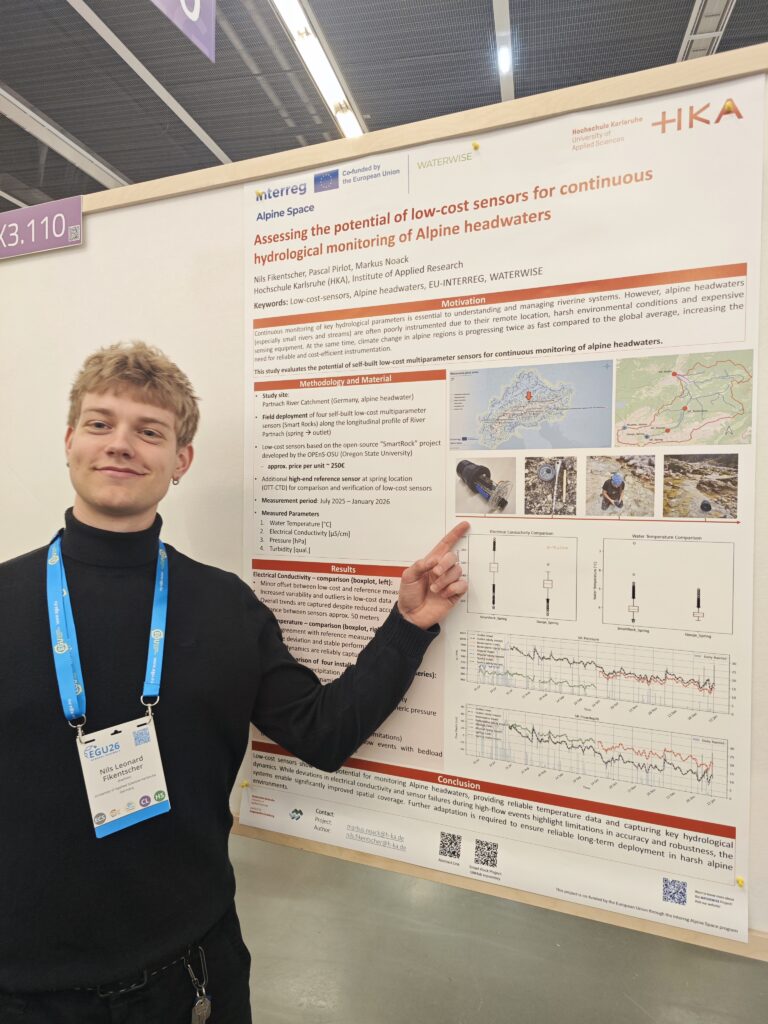
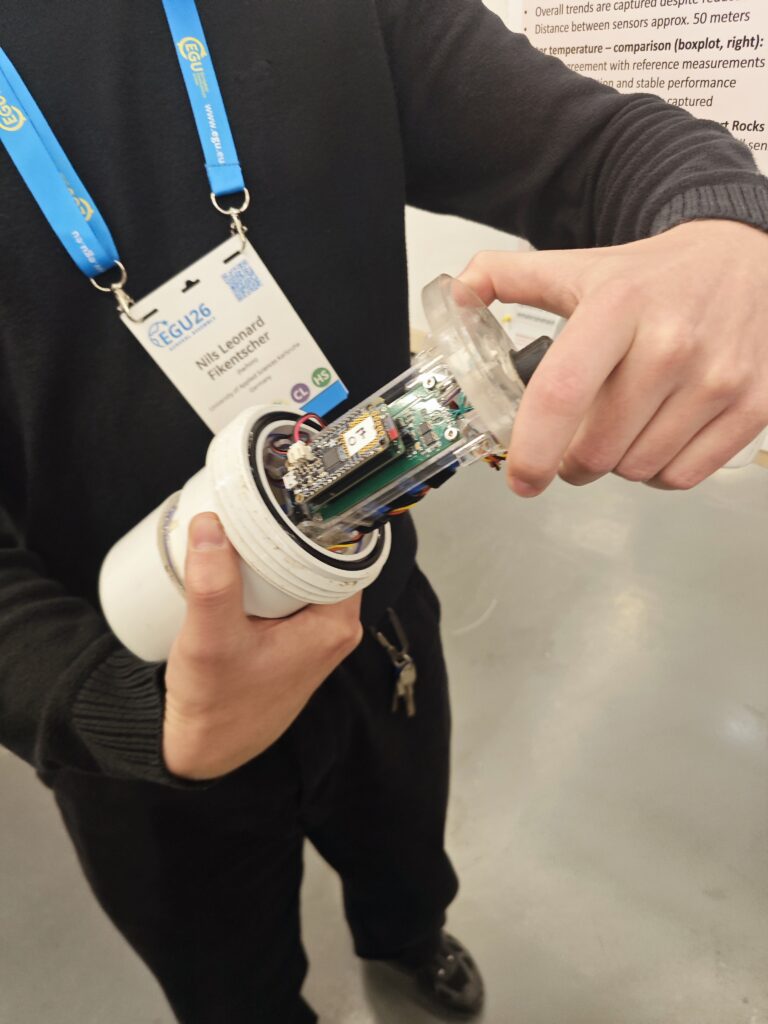
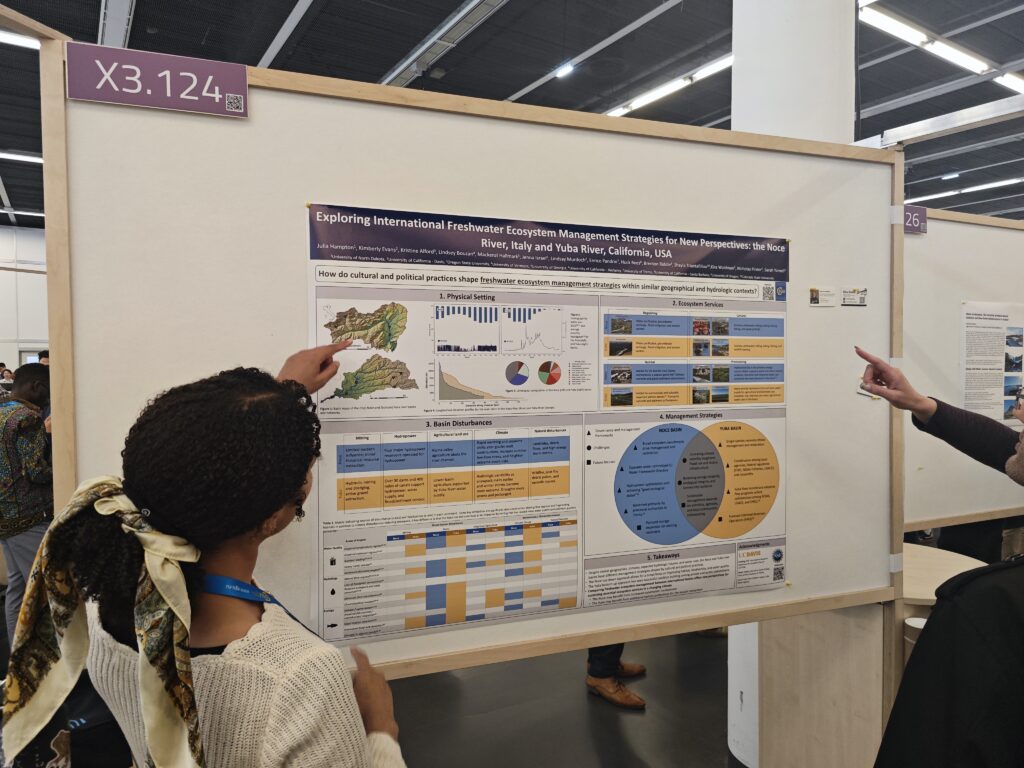
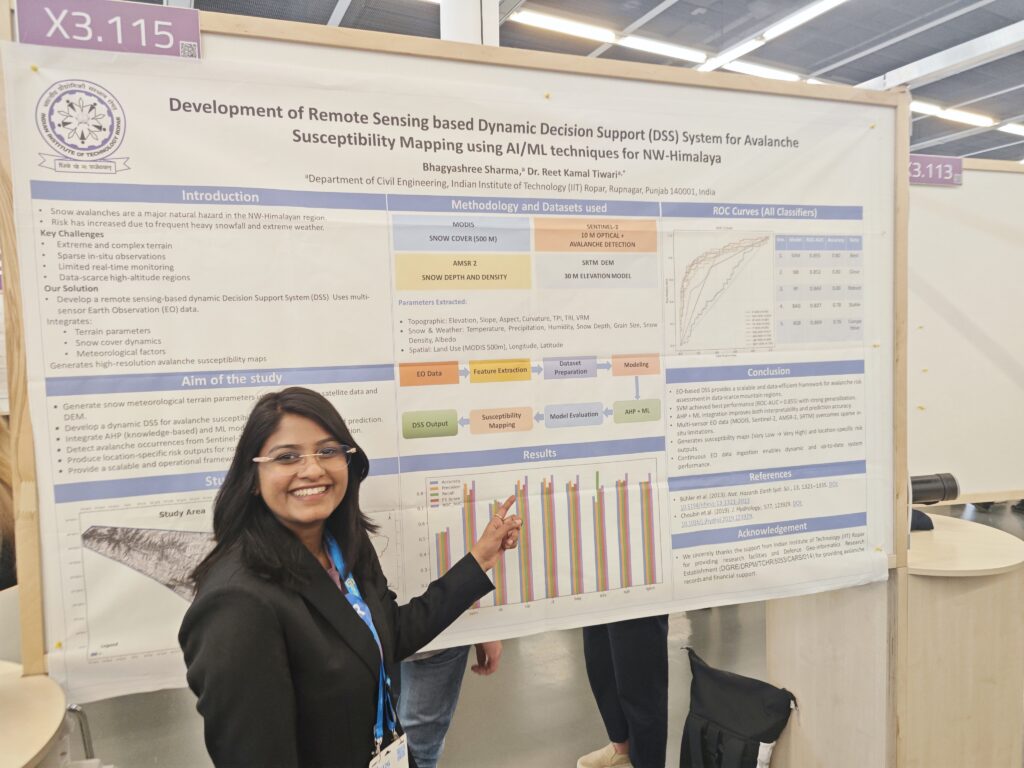
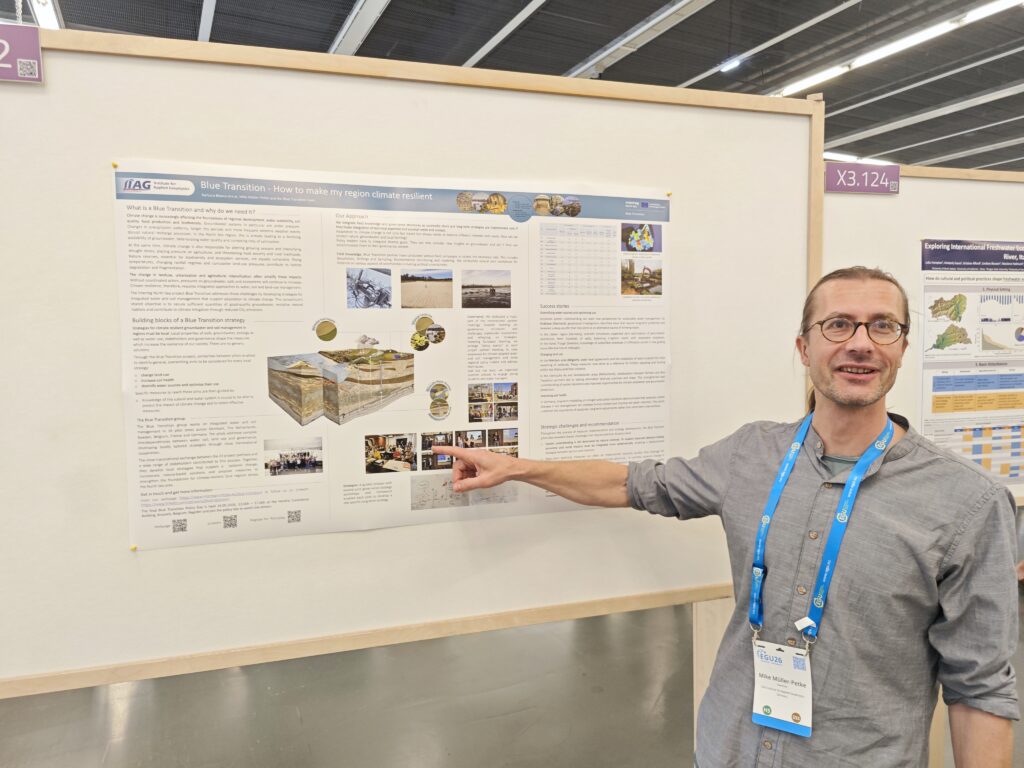
Together, the two sessions reflected the breadth of mountain research currently underway within the MRI community and reinforced the importance of interdisciplinary collaboration for addressing the complex challenges facing mountain regions worldwide. Both sessions had oral and poster presentations. Below are a selection of the posters from the Global Environmental Change in Mountain Social-Ecological Systems.