
Researchers from around the world have outlined priorities for improving high-resolution climate modeling in mountain regions in a new workshop report. Among the key recommendations was supporting collaboration and data sharing across disciplines and advancing coordinated international research.
A new workshop report published in the Bulletin of the American Meteorological Society highlights the growing importance of international collaboration in tackling one of mountain science’s biggest challenges: accurately representing mountainous regions in next-generation climate models.
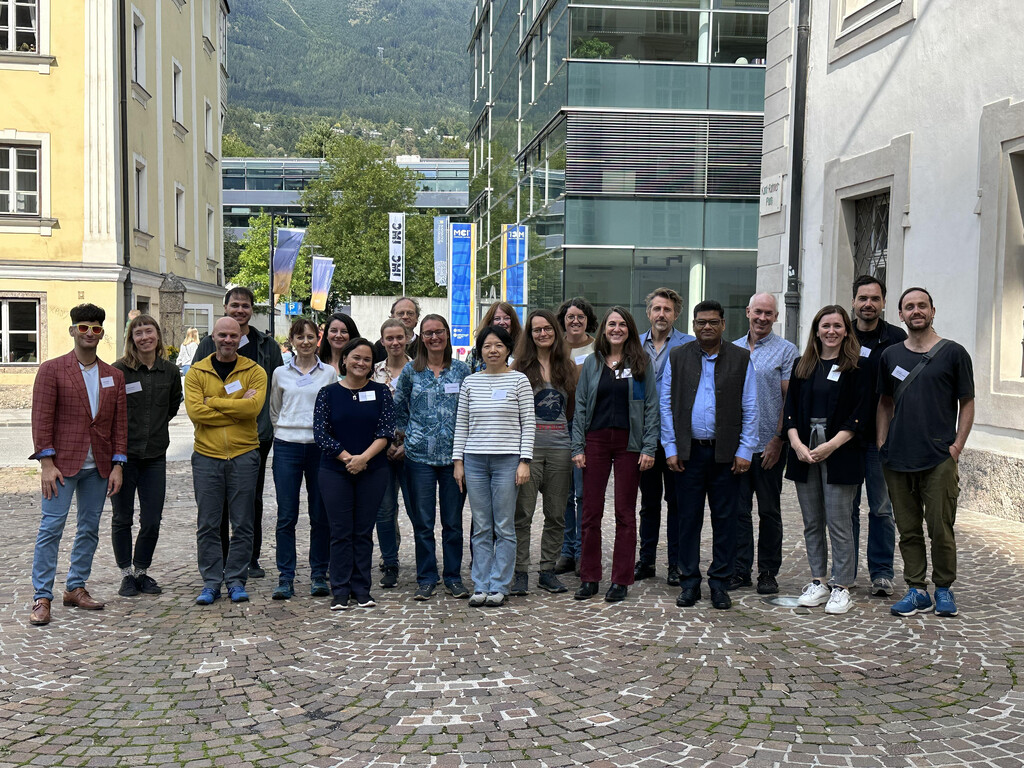
The report, Advances in High-Resolution Climate Modeling and Cryosphere Systems over Mountainous Regions, summarizes discussions from a workshop held in Innsbruck, Austria, in September 2025, immediately before the International Mountain Conference (IMC). The event was jointly organized under the World Climate Research Programme’s Climate and Cryosphere (WCRP CliC) project Impacts of Changes in the Mountain Cryosphere (IC-MontC) and supported by the Mountain Research Initiative (MRI), WCRP CliC, and the IC-MontC Steering Group. It brought together researchers from across the atmospheric, cryosphere, hydrology, remote sensing, and climate modeling communities to identify the scientific priorities needed to improve kilometer-scale climate simulations in mountain regions.
Bringing Communities Together
Although high-resolution climate models are becoming increasingly capable of resolving complex mountain terrain, workshop participants agreed that higher resolution alone is not enough. Improving projections of snow, glaciers, water resources and mountain hazards will require stronger links between modeling and observational communities, better process understanding, and closer collaboration across disciplines.
Among the key recommendations were coordinated observational campaigns, standardized datasets for model evaluation, improved sharing of observations, and international model intercomparison efforts focused specifically on mountain climate and cryosphere systems.
The workshop also emphasized that equitable participation from researchers in the Global South will be essential, highlighting the need for improved access to computational resources, open data, and capacity-building opportunities.
Ongoing Need for International Collaboration
One of the workshop’s strongest messages was that advancing high-resolution mountain climate science will require sustained international collaboration. Participants emphasized the need for stronger links between atmospheric, cryosphere, hydrology, and observational communities, as well as closer coordination between regional and global modeling efforts to improve the representation of mountain processes.
The report identifies international initiatives such as MRI, WCRP CliC, and IC-MontC as important platforms for supporting this collaboration. Together, they help bring researchers and disciplines together, foster knowledge exchange, and enable coordinated scientific efforts that no single institution or project could achieve alone.
The MRI also contributed directly to the workshop and its aims by supporting travel grants that enabled broad participation across career stages and regions, helping to strengthen multidisciplinary exchange and global engagement. In addition, the MRI’s Elevation-Dependent Climate Change (EDCC) Working Group featured prominently in the discussions. Working Group lead Nick Pepin presented ongoing EDCC activities alongside the emerging Unified High-Elevation Observation Platform (UHOP), an initiative that aims to strengthen coordinated observations across mountain regions worldwide.
The report acknowledges MRI as both a supporter of the workshop and an important international platform for collaboration. MRI co-funded travel support that enabled broad participation across career stages and regions, helping to foster multidisciplinary exchange.
Looking Ahead
The workshop represents the first activity of the WCRP CliC IC-MontC initiative and lays the foundation for future collaborative efforts, including coordinated modeling experiments, improved observational networks and continued community building.
For the MRI, the report reinforces the organization’s role as a connector across disciplines, institutions and regions. As mountain researchers work to better understand rapidly changing mountain environments, sustained international collaboration will be essential – and the MRI is well positioned to help bring those communities together.
Read More
Ban, N., E. Collier, L. Li, K. L. Rasmunssen, and M. Taylor, 2026: Advances in High-Resolution Climate Modeling and Cryosphere Systems over Mountainous Regions. Bull. Amer. Meteor. Soc., 107, E1315–E1322, https://doi.org/10.1175/BAMS-D-26-0088.1.
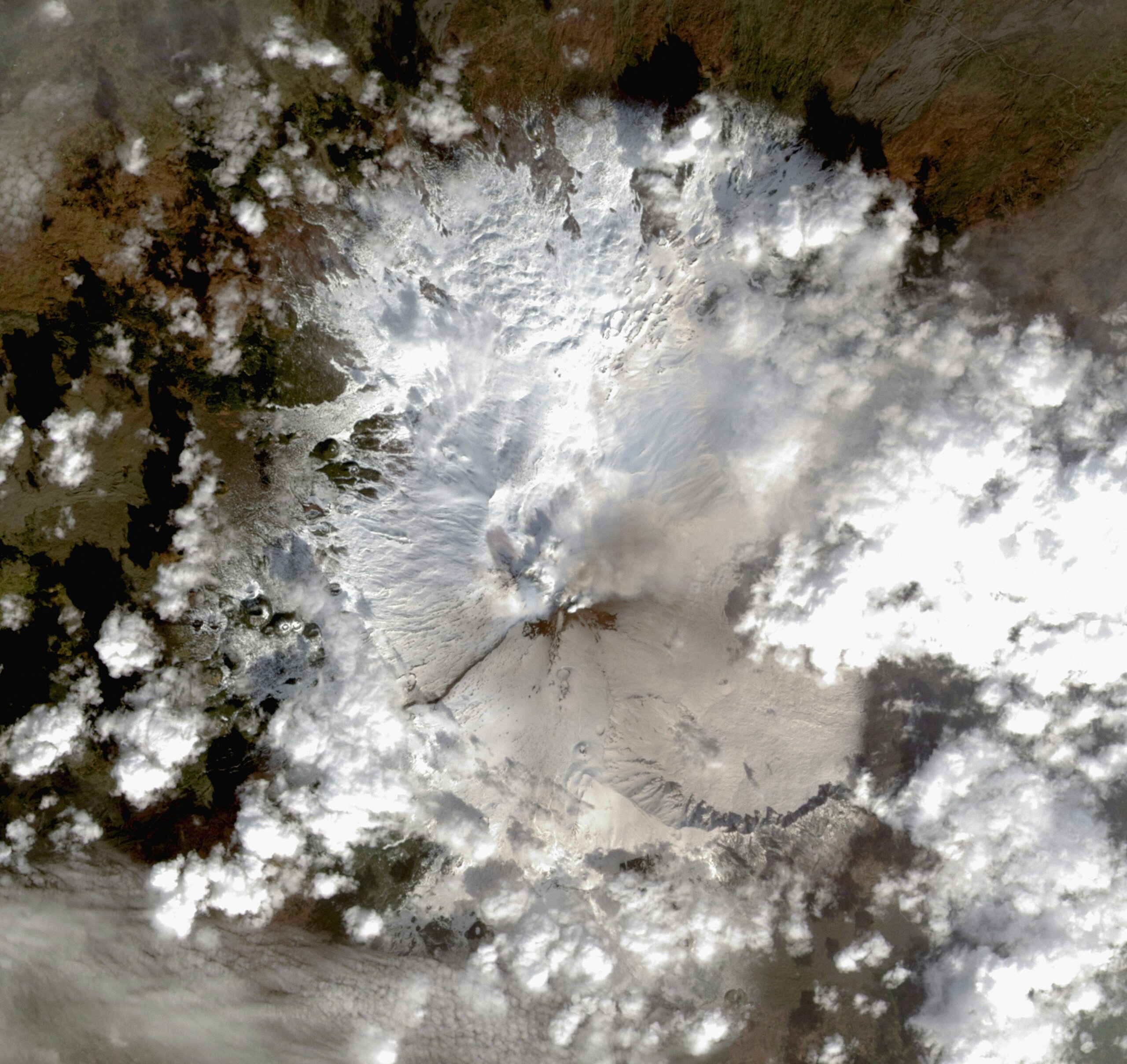
Cover photo by USGS.