

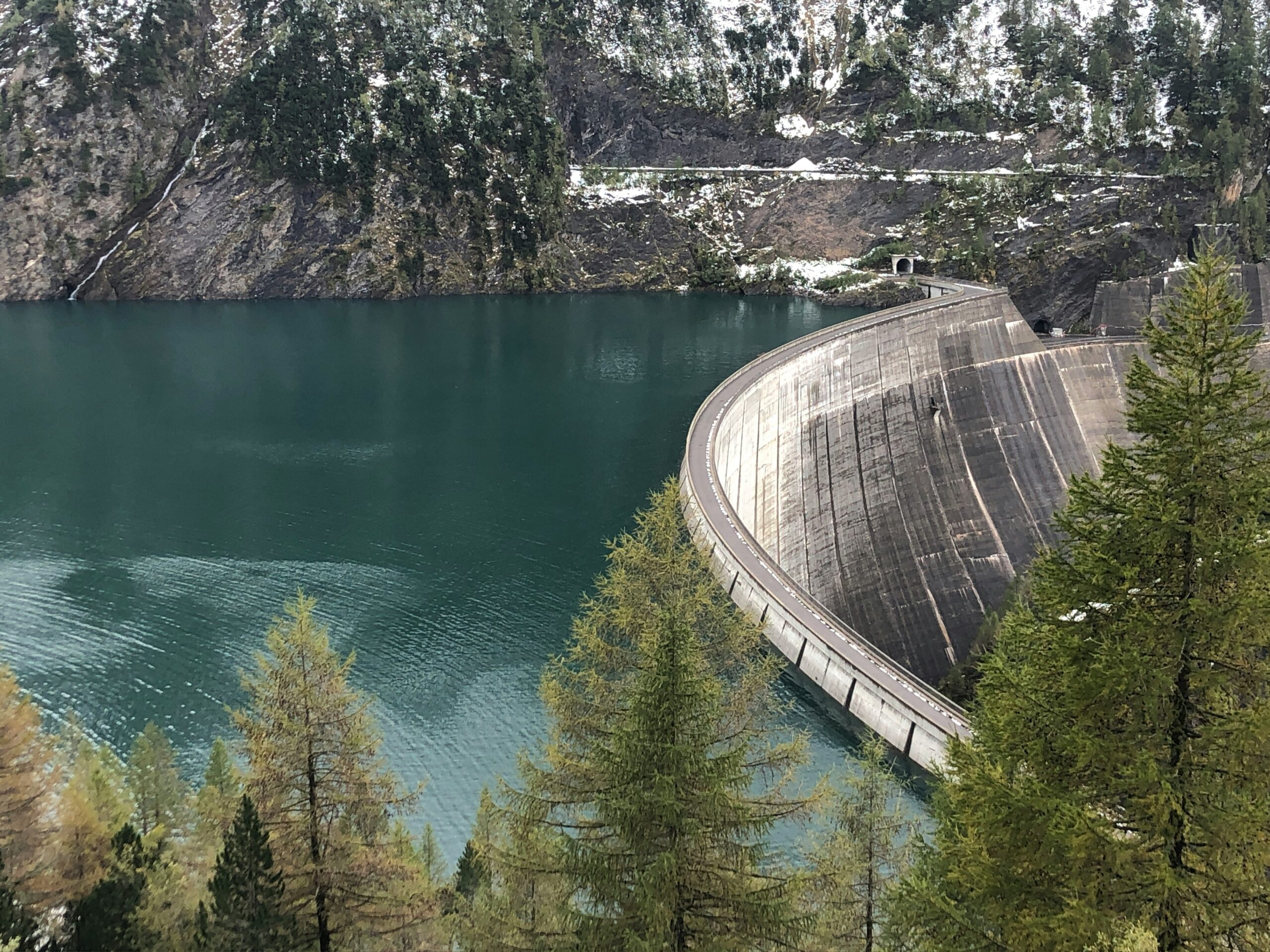
How did the European Alps become a powerhouse for the continent’s industrial development, and what can this history tell us about today’s energy and environmental challenges? In a new review published in Mountain Research and Development, MRI Chair Jörg Balsiger examines Marc Landry’s book Mountain Battery: The Alps, Water, and Power in the Fossil Fuel Age, exploring the complex relationship between mountain landscapes, energy production, and European history.
As Europe grapples with rising temperatures, increasingly severe droughts, and growing competition for water resources, the history of Alpine hydropower has acquired renewed relevance. In his review, MRI Chair Jörg Balsiger reflects on how many of the challenges anticipated in Landry’s book, from reduced river flows affecting electricity generation to tensions over water allocation, were already making headlines during the summer of 2026.
Published in 2025, Mountain Battery traces the development of hydroelectricity in the European Alps from the mid-19th century to the present. Drawing on extensive archival research across five countries, Landry explores how technological innovations, political ambitions, and industrial demand transformed Alpine rivers and valleys into an interconnected energy system serving much of Europe.
“Landry brings considerable clarity to complex political developments while contributing to fields of scholarship in which water power has often been overshadowed by an exclusive focus on coal.”
– Jörg Balsiger.
Central to this transformation was the emergence of hydropower as ‘white coal’, promoted as an alternative to the fossil fuels driving European industrialisation. Yet, as Landry demonstrates, the development of Alpine hydroelectricity was deeply intertwined with the wider history of coal, industrial expansion, and political change.
The book also reveals how the construction of dams, reservoirs, and power infrastructure reshaped mountain environments and societies, often generating tensions over land, water, and competing interests. From early engineering ambitions to the upheavals of two world wars and postwar reconstruction, Landry places Alpine hydropower within a much broader European and global history.
Balsiger praises the book’s ambitious transnational perspective, rich historical detail, and accessible writing, describing it as an important contribution to environmental history. He also highlights its relevance to contemporary discussions about energy transitions, climate change, and the governance of mountain resources.
For the mountain research community, the book offers a valuable reminder that today’s debates about renewable energy, water security, and environmental change are rooted in a long history of technological development, political choices, and competing demands on mountain landscapes. Understanding that history can help inform how these increasingly interconnected challenges are approached in the future.
Jörg Balsiger is Chair of the Mountain Research Initiative and Associate Professor at the Department of Geography and Environment and the Institute of Environmental Sciences of the University of Geneva, where he is also the Director of the Institute for Environmental Governance and Territorial Development.
Citation: Balsiger, J. (2026). ‘Mountain Battery: The Alps, Water, and Power in the Fossil Fuel Age, by Marc Landry.’ Mountain Research and Development, 46(4), M3–M4: https://doi.org/10.1659/mrd.mm283
Image by Matteo Cheda.