

21 November 2026 | Fribourg, Switzerland
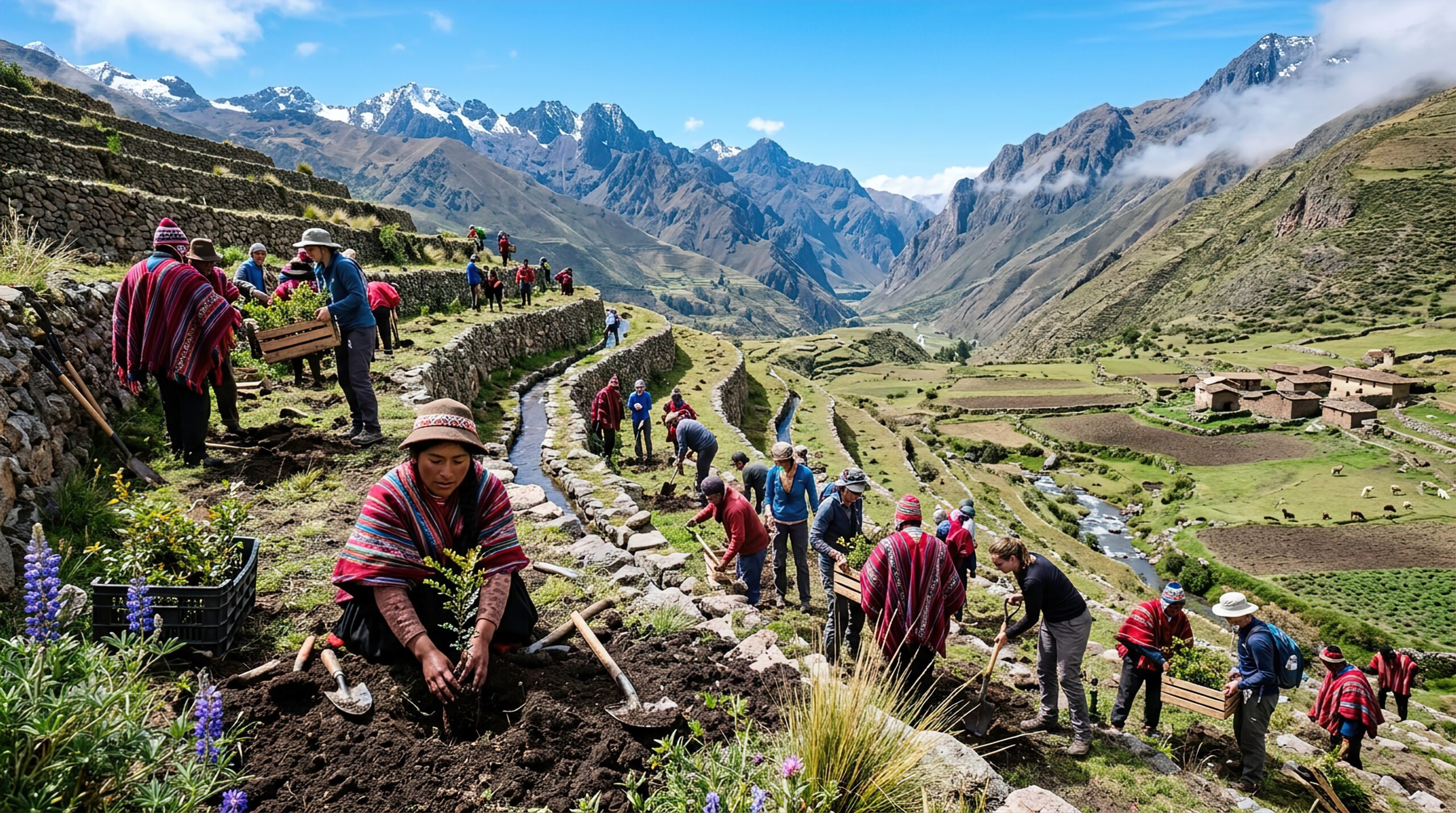
How are traditional mountain commons adapting to environmental and socioeconomic change? And what new forms of collective action are emerging in mountain regions? These questions were at the centre of the Mountain Commons session at the 24th Swiss Geoscience Meeting (SGM), held at the University of Fribourg on 21 November 2026.
Co-convened by the Mountain Research Initiative (MRI), the Interdisciplinary Centre for Mountain Research (CIRM) at the University of Lausanne, and the Forum Landscape, Alps, Parks (FoLAP) of the Swiss Academy of Sciences, the full-day session featured 14 oral presentations and two posters, bringing together researchers working across the European Alps, the Himalayas, the Caucasus and the Andes. Contributions explored the historical development, transformation and emergence of commons institutions, highlighting their continued relevance and the growing pressures they face. Below, we share a selection of research highlights from this engaging day of interdisciplinary exchange.
New commons and changing mountain livelihoods
Leïla Kebir and colleagues from the University of Lausanne presented findings from the ComMount project, drawing on 15 case studies in Valais and Ticino. Their research examined emerging forms of commons, including community-run grocery shops, cafés, mountain huts and heritage associations. These initiatives extend collective resource management beyond traditional agricultural and forestry activities, helping to sustain local services, strengthen social connections and improve quality of life in mountain villages.
However, the findings also revealed important limitations. Although these initiatives contribute to local development and community wellbeing, their economic impact is generally modest, and many depend heavily on volunteer labour. Rather than fundamentally transforming existing economic systems, they often represent locally grounded efforts to sustain community life and maintain the distinctive character of mountain villages.
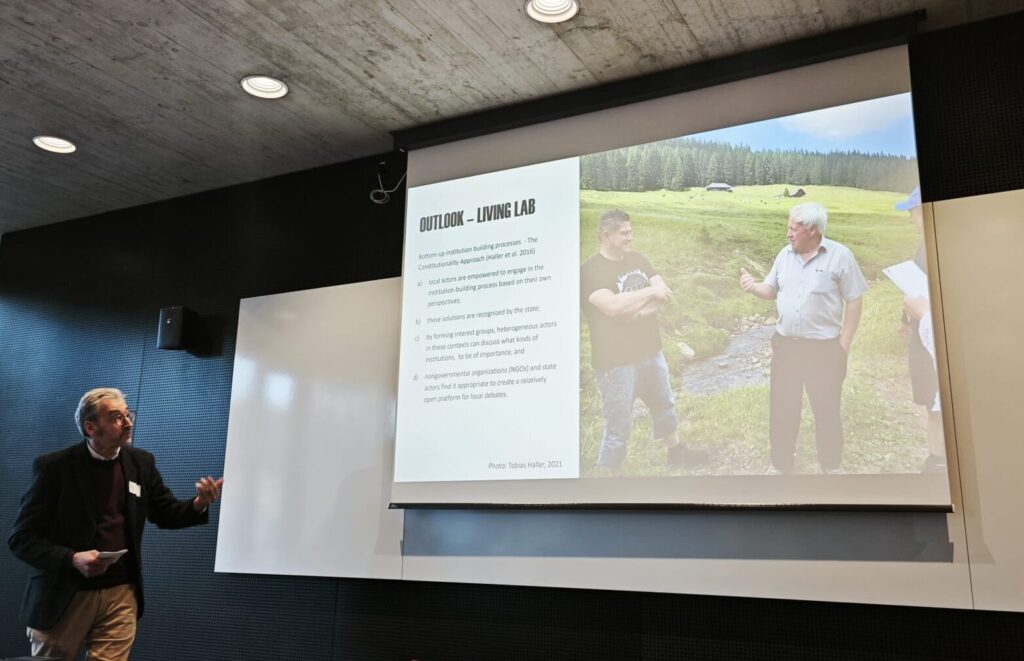
Tobias Haller and Ariane Zangger from the University of Bern explored the resilience of longstanding commons organisations in Sarnen, Obwalden, through the Japanese concept of Satoyama, which emphasises the interconnected relationships between people and nature. Their research illustrated how these institutions have adapted over generations, while navigating competing demands for land and resources, changing conservation policies and the recognition of traditional ecological knowledge. The presentation also explored the potential of participatory Living Labs to support locally driven institutional change.
Adapting traditional commons to new environmental pressures
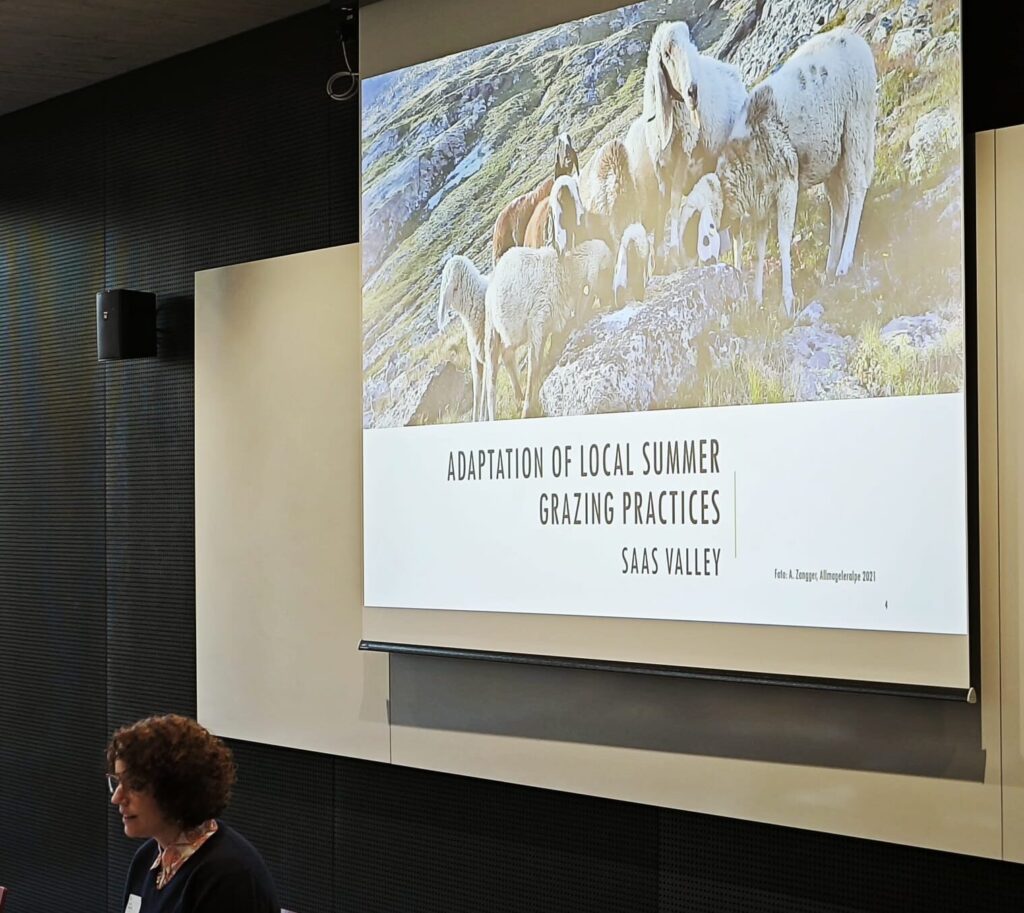
Ariane Zangger examined how the return of wolves is transforming communal summer grazing practices in the Swiss Alps. Drawing on case studies from Törbel and the Saas Valley, she illustrated how local farmers have developed new approaches to herd protection and collective grazing management. These examples demonstrate the capacity of local communities to develop solutions through collective action, while also highlighting challenges associated with securing recognition and support from higher levels of government.
Moving to the Central Karakoram of northern Pakistan, Matthias Schmidt examined how climate change, economic modernisation and changing livelihood aspirations are affecting communal water and grazing management. His research from Shigar in Baltistan revealed contrasting trends. Traditional collective irrigation systems remain functional, with communities continuing to organise canal maintenance and water distribution. However, high-altitude pasture management faces growing difficulties as younger generations increasingly pursue education and employment outside agriculture, reducing participation in communal herding responsibilities.
These contrasting experiences illustrate how the resilience of commons institutions can vary considerably, even within the same mountain communities.
Mountain commons, Indigenous heritage and cultural landscapes
Cristina Prieto-Olavarría and Horacio Chiavazza presented research on the Qhapaq Ñan, the ancient Andean road network connecting six South American countries and recognised as a UNESCO World Heritage Site in 2014.
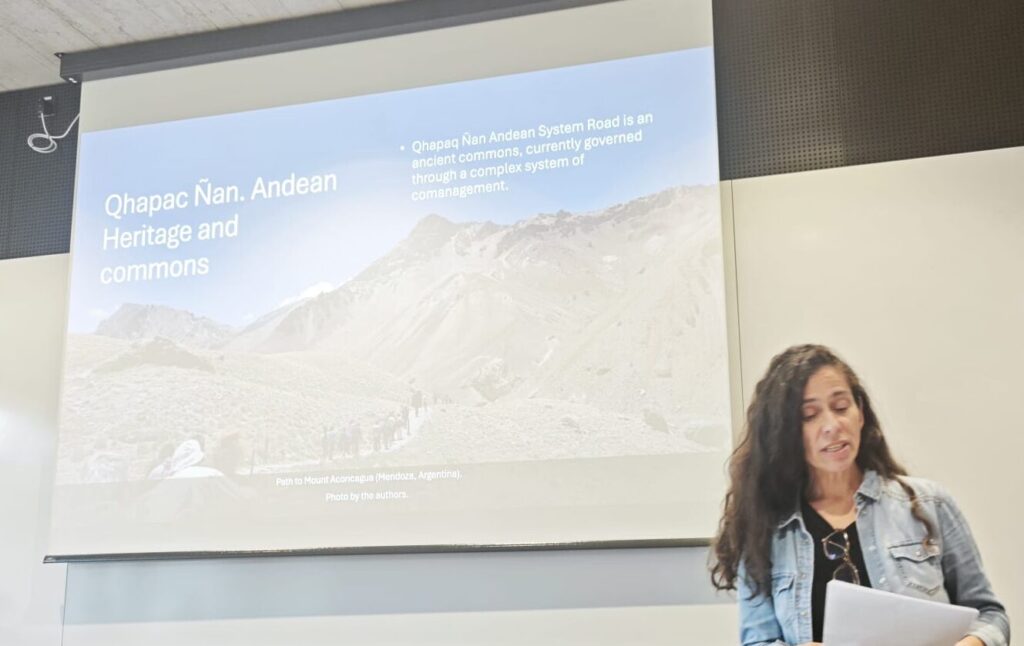
Focusing on Mendoza, Argentina, the presentation examined the challenges of governing this living cultural landscape through arrangements involving government institutions and Indigenous Huarpe communities. Examples included Indigenous participation in heritage conservation and restoration activities at Ranchillos, as well as ongoing conflicts surrounding the proposed PSJ Cobre Mendocino mining project.Cristina Prieto-Olavarría (IANIGLA–CONICET, Argentina) presents research on the Qhapaq Ñan, the ancient Andean road network, highlighting the challenges of managing this UNESCO World Heritage Site amid environmental pressures, mining development and Indigenous rights concerns.
The presentation highlighted concerns raised by Indigenous communities regarding ancestral territorial rights, water protection and the adequacy of consultation processes associated with the mining proposal. It emphasised the importance of intercultural dialogue, meaningful community participation and the recognition of Indigenous rights in decisions affecting shared heritage and mountain landscapes.
Looking ahead: The evolving role of mountain commons
Across the session, a recurring theme was that mountain commons are neither static institutions nor simply remnants of the past. Some traditional systems face declining participation, competing interests and increasing external pressures, while others continue to adapt and new forms of collective organisation emerge to meet contemporary needs.
The contributions underscored the importance of locally grounded institutions, community participation and the recognition of diverse forms of knowledge in navigating environmental and socioeconomic change. They also demonstrated the value of interdisciplinary research in understanding how mountain communities govern shared resources, cultural landscapes and essential services.
The MRI thanks the session co-conveners, chairs, presenters and participants for their contributions to an engaging exchange on the past, present and future of mountain commons.
We extend our sincere thanks to all presenters, session organisers, partners, and participants for their contributions to a stimulating day of discussions and interdisciplinary exchange on the past, present, and future of mountain commons.