


New Adaptation at Altitude brief looks at how far National Adaptation Plans reach mountain regions.
National Adaptation Plans (NAPs) are a key instrument through which countries identify adaptation priorities, coordinate actions, and guide implementation. This Adaptation at Altitude brief reviews how NAPs in 48 countries with significant mountain regions recognise and support critical enabling conditions for effective adaptation. Using mountain and climate risk data with AI-supported document analysis, it points to where national ambition is not yet reaching mountain regions and recommends ways to address this.
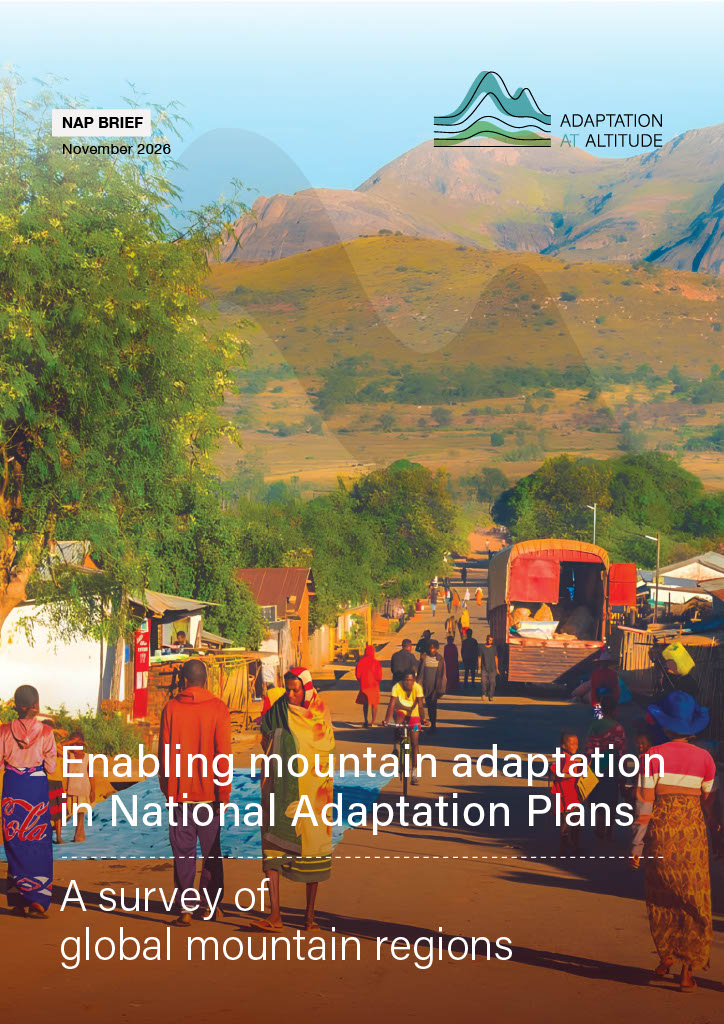
The brief looks at five enabling factors: governance and institutions, collaboration and inclusive decision-making, data and knowledge, technical capacity, and finance. It finds that these are generally recognised in the plans, but are only unevenly turned into concrete action for mountain regions. Data sharing and the inclusion of Indigenous Peoples are among the gaps, and only 27% of the countries estimate the funding needed for mountain-specific measures. Countries that name mountains as a policy priority have a much higher share of mountain-specific actions, which is why the brief recommends making mountains an explicit priority as countries revise their NAPs.
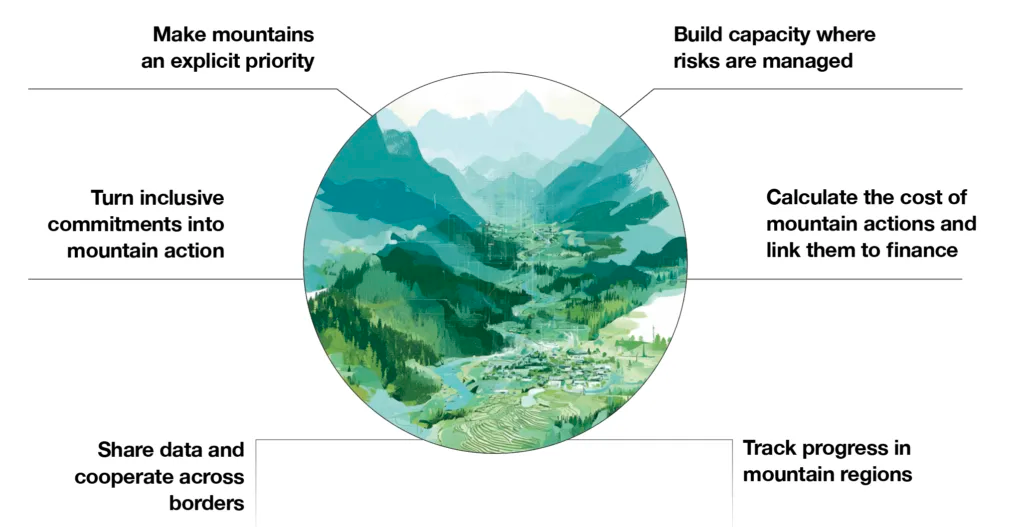
Figure: Key recommendations for enabling effective climate adaptation in mountain regions. Source: Zoï Environment Network
This is the second brief in a series assessing mountain adaptation in NAPs. It is relevant for policymakers, practitioners and partners supporting national adaptation planning in mountain countries. Read the brief on the Adaptation at Altitude website for the full recommendations and details.
Cover image by Xiaoyang Ou