
08.05.2026 | 18:00
This year’s conference will take place in Vienna, Austria and online from 3-8 May 2026.
The EGU General Assembly 2026 brings together geoscientists from all over the world to one meeting covering all disciplines of the Earth, planetary, and space sciences. The EGU aims to provide a forum where scientists, especially early career researchers, can present their work and discuss their ideas with experts in all fields of geoscience.
MRI-Endorsed Sessions
Session ITS3.15/NH13.2 | Global Environmental Change in Mountain Social-Ecological Systems: Advances and New Perspectives
Mountains are complex social-ecological systems and natural laboratories in which to tangibly explore and understand how drivers and processes of global change manifest, and the impacts (or effects these have for specific places and beyond. In this session, we invite inter- and transdisciplinary contributions that examine past, present, and future environmental change, their associated impacts for ecosystems and people in mountain environments, and measures taken to address these impacts. This session is open to conceptual as well as empirical research on observations, modelling or scenarios studies of mountain climate, cryosphere, ecology, hazards, and hydrology, and their interactions, which could also incorporate intersecting socio-economic dimensions and risks. Mountains as complex terrain can be difficult to adequately parameterize in (climate) models and many areas of the world lack high-elevation monitoring infrastructure that can record data at the relevant locations, densities, scales, frequencies, and resolutions needed. Likewise, there is a need to capture and account for socio-economic changes such as demographic and land-use change and their projections, thereby enhancing our understanding of how hazards, vulnerability, and exposure interact in terms of impacts and risks.
We particularly welcome contributions that describe how steps are being taken to address such knowledge gaps, including high-elevation integrated monitoring efforts, observations along elevational gradients, climate downscaling strategies and remote sensing innovations, and integration methods that include societal data and information to characterise and represent a more comprehensive systems approach to global change.
This session is endorsed and supported by the Mountain Research Initiative (MRI) and the Institute for Interdisciplinary Mountain Research of the Austrian Academy of Sciences (ÖAW).
The deadline for abstract submission is Thursday, 15 January 2026, 13:00 CET.
Session AS1.23 | Mountain Weather and Climate
Convener: Stefano Serafin | Co-conveners: Sven Kotlarski, Anna Napoli, Olivia Ferguglia
Mountains cover approximately one-quarter of the total land surface on the planet, and a significant fraction of the world’s population lives within them, in their vicinity, and downstream. Orography critically affects weather and climate processes at all scales and, in connection with factors such as land-cover heterogeneity, is responsible for high spatial variability in mountain weather and climate. This session showcases research that contributes to improving our understanding of weather and climate processes in mountain and high-elevation areas around the globe, as well as their modification induced by global environmental change. This includes the interaction of mountain weather and climate with the terrestrial cryosphere.
This session welcomes contributions describing the influence of mountains on the atmosphere on meteorological and climate time scales, including terrain-induced airflow, orographic gravity waves, orographic precipitation, land-atmosphere exchange over mountains, forecasting, and predictability of mountain weather. It also encourages theoretical, modeling and observational studies on orographic gravity waves and their effects on the weather and the climate. Furthermore, it invites studies that investigate climate processes and climate change in mountain areas based on monitoring and modeling activities. Particularly welcome are contributions that connect with and address the interdisciplinary objectives of the MRI Elevation-Dependent Climate Change (EDCC) Working Group. This session will feature contributions on the influence of mountains on the atmosphere on meteorological and climate time scales, including terrain-induced airflow, orographic gravity waves, orographic precipitation, land-atmosphere exchange over mountains, forecasting, and predictability of mountain weather, and also studies that investigate climate processes and climate change in mountain areas based on monitoring and modeling activities.
If your work deals specifically with km-scale modelling of mountain climate, or with field observations connected with the TEAMx programme, you are encouraged to consider the following sessions as an alternative:
AS1.24 High-Resolution Climate Modeling in Mountainous Regions
AS1.25 Transport and Exchange Processes in the Atmosphere Over Mountains – TEAMx Observational Campaigns (TOC, HEFEX, PC22)
The deadline for abstract submission is Thursday, 15 January 2026, 13:00 CET.
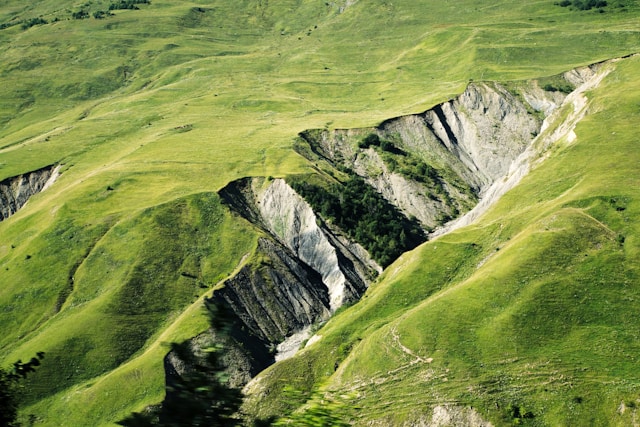
Photo by Denys Zhylin on Unsplash.