
Mountain regions are the world’s ‘water towers’, supplying crucial freshwater that sustains ecosystems and human societies far downstream. Climate change is disproportionally affecting these regions, altering the timing, year-to-year variability and reliability of mountain runoff, while also affecting water quality. Substantial research focuses on snow and glacier changes within mountains, but the broader consequences for downstream human and environmental systems remain poorly understood.
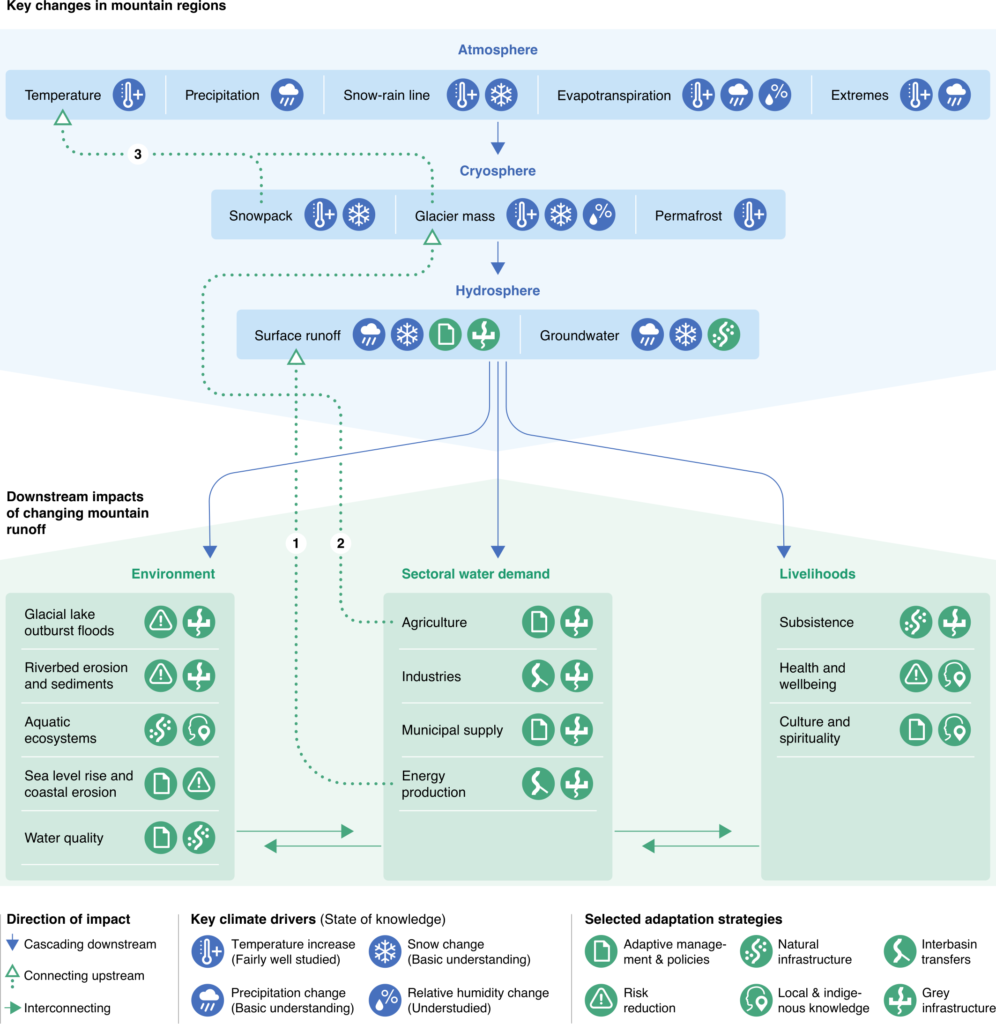
A comprehensive perspective led by Daniel Viviroli at the University of Zurich now highlights how changes in the mountain water cycle cascade downstream, affecting water supply, ecosystems, and human activities in many ways. Importantly, the study also shows that decisions and pressures downstream can feed back to influence mountain hydrology. It was recently published in Nature Climate Change.
From Irrigation, Groundwater Resources, and Energy Production to Social and Cultural Dimensions
These cascading impacts affect regions all over the world. Among the most consequential impacts are those on food production in lowland areas that strongly depend on mountain water for irrigation, such as in South, East, and Central Asia. In response to changing flow regimes and declining contributions from snow and glaciers, groundwater is increasingly overexploited to sustain irrigated agriculture. In several regions, this leads to the intrusion of saline water into previously fresh aquifers, for example along the Pacific dry coastal belt spanning Chile, Peru, Mexico, and California. At the same time, glacier retreat can mobilize pollutants, while the degradation of mountain wetlands reduces their capacity to retain contaminants, contributing to declining downstream water quality.
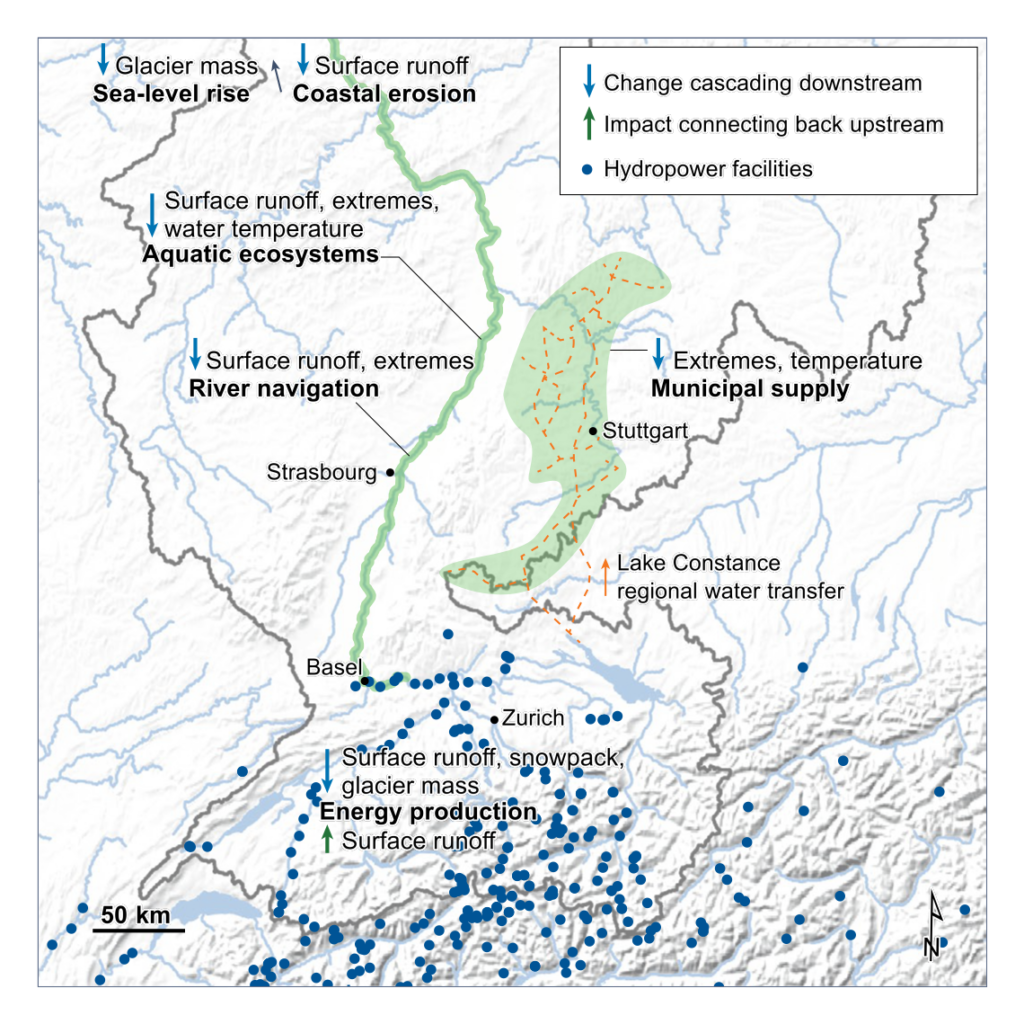
Central Europe is also affected: Projected changes in river flows could extend shipping restrictions on the Rhine River by more than two months per year by end of the century, disrupting trade, energy supply, and industrial production. Reduced summer flows and higher water temperatures can further intensify pollution, including thermal loading from industrial return flows, such as those from nuclear power plants along the Rhone River in France.
Beyond physical impacts, the changes have profound social and cultural dimensions. In indigenous and rural communities of the Andes and Himalayas, glacier shrinkage is perceived as a sign of imbalance between natural and human systems or as the illness of mountain deities. These transformations can cause anxiety, ecological grief, and disruptions to cultural and spiritual practices.
Water management responses downstream can, in turn, influence mountain regions. Decisions to build dams, reservoirs, and interbasin transfers – often taken in the lowlands to address changing water availability or energy demand – can alter flow regimes and sediment transport upstream.
Urgent Need for Adaptation and Cooperation
Growing competition for water among sectors and between upstream and downstream users require careful management. Grey infrastructure such as reservoirs and interbasin transfers can help regulate water supply, but they also carry substantial ecological impacts and increase the potential for conflict. Their downstream impacts, including reduced sediment delivery, can contribute to subsidence of large river deltas and coastal erosion. Nature-based solutions – including wetland and forest restoration or managed aquifer recharge – offer complementary approaches.
Transboundary cooperation is increasingly critical, as many large rivers cross national borders and must support hydropower, irrigation, flood control, industry, tourism, and ecosystem protection simultaneously. Integrating local and indigenous knowledge with scientific insights can help design responses that reduce conflict and enhance resilience.
Looking Ahead
The perspective stresses that mountain and lowland regions form tightly interconnected systems. Improved monitoring, modeling, and scenario planning are essential to support informed decision-making. While mountain environments are changing rapidly and adaptation is unavoidable, climate mitigation remains a decisive lever: even small differences in future warming matter for water resources from mountains to lowlands.
Mountains and Lowlands: Interconnected Water Systems
Mountains play a crucial role in supporting irrigation and food production in the lowlands. Beyond this, they modulate seasonal river flows, recharge aquifers, support river navigation and sustain ecosystems. Changes in snowmelt, glacier runoff and groundwater flows can intensify droughts and floods, reduce river baseflow, increase water temperatures, degrade water quality, alter sediment transport, threaten fisheries and contribute to sea-level rise.
Social impacts are equally far-reaching, affecting livelihoods, food security, physical health – including risks from diseases during floods and droughts –, mental health, and cultural and spiritual practices in communities that are affected by changes in mountain water and glacier retreat. At the same time, downstream water use, infrastructure development and land management can propagate back upstream by altering flow regimes, sediment dynamics and even local climate conditions in mountain regions.
Read More:
Viviroli, D., Drenkhan, F., Scott, C.A. et al. Cascading downstream impacts of water cycle changes in mountain regions. Nat. Clim. Chang. 16, 129–142 (2026). https://doi.org/10.1038/s41558-025-02552-2
This article was first published by the Department of Geography at the University of Zurich. You can view the original article on their website.
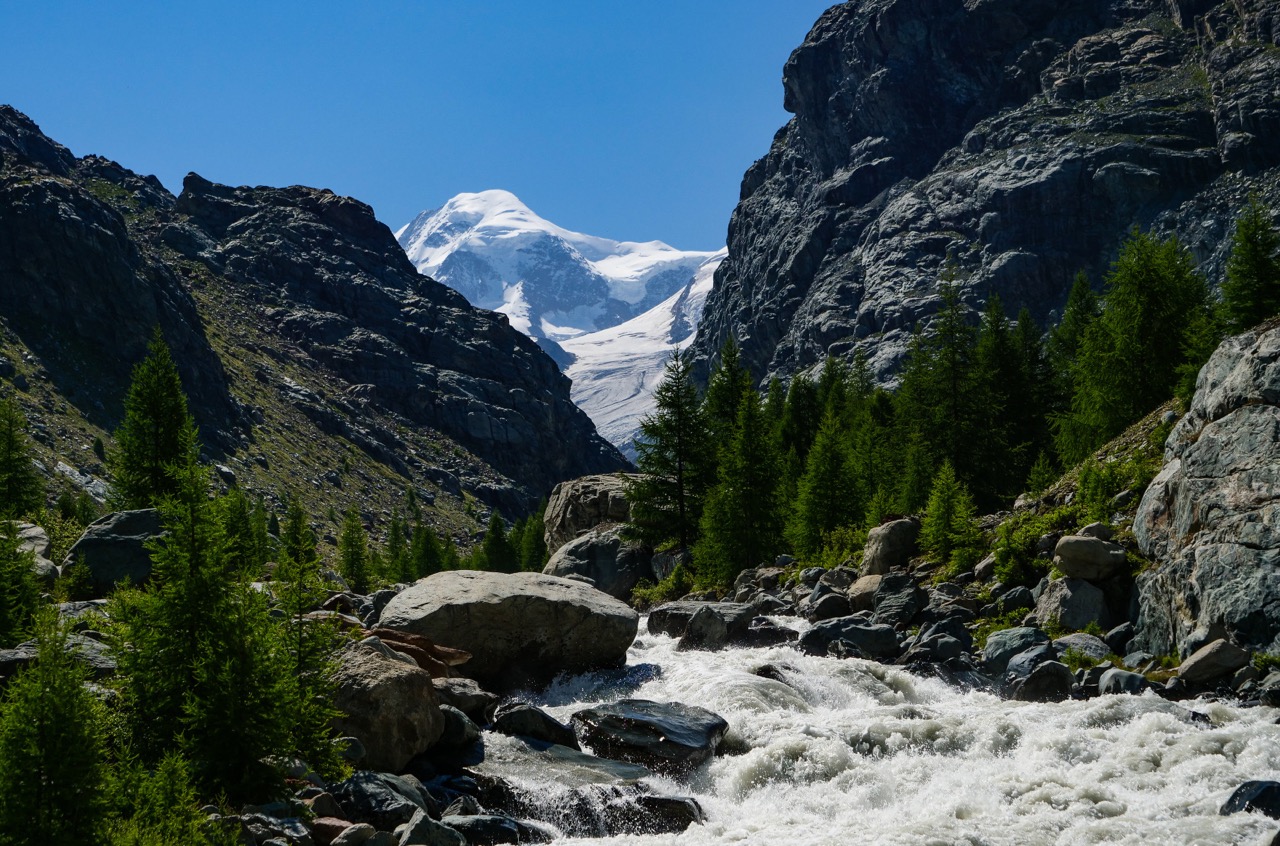
Cover image: Gornera River below Gagenhaupt, Mattertal. Image by Daniel Viviroli.