
The World Day for Glaciers 2026 marked a critical transition for the global cryosphere community. As the International Year of Glaciers’ Preservation (IYGP2025) came to a close, a new Decade of Action began – calling for stronger collaboration, relevant data and observations, and impact-oriented solutions.
On 18 and 19 March 2026, global leaders, scientists, and stakeholders gathered at UNESCO Headquarters in Paris for high-level celebrations marking World Day for Glaciers and World Water Day. The event represented a pivotal moment for the mountain research community: the closing of the International Year of Glaciers’ Preservation 2025 (IYGP2025) and the launch of the Decade of Action for Cryospheric Sciences (2025–2034).
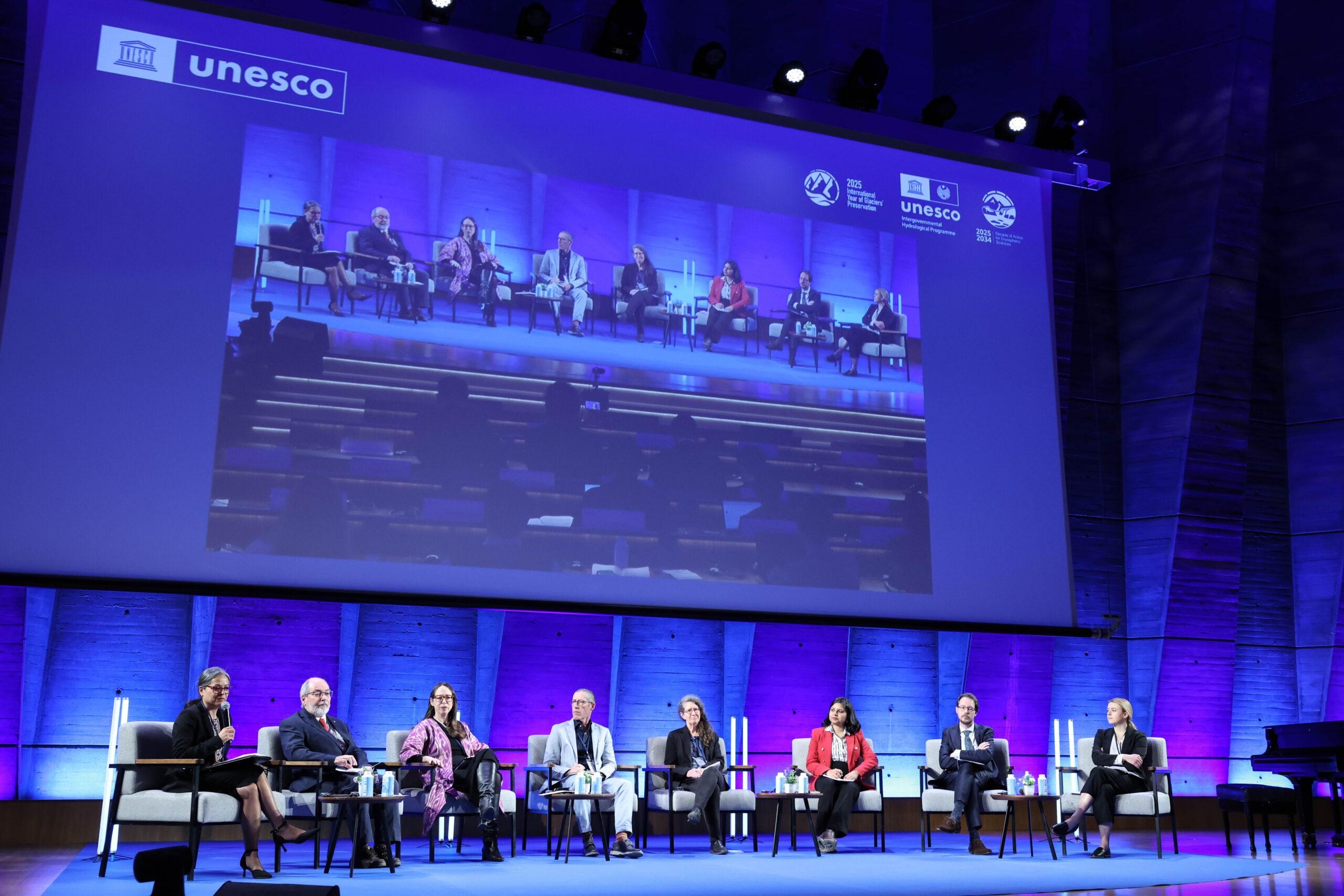
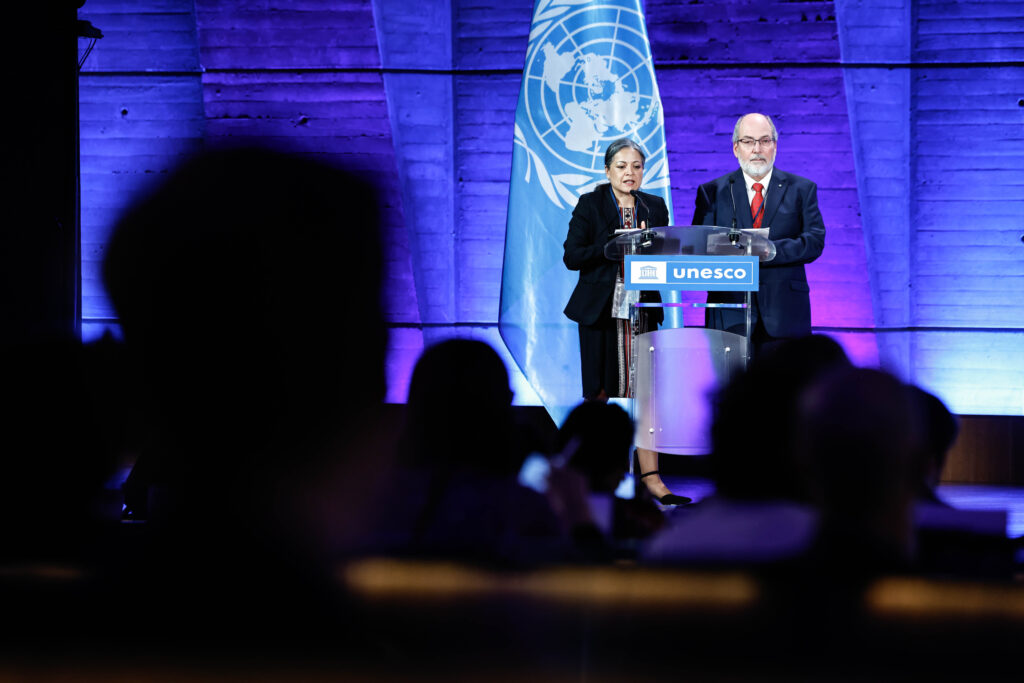
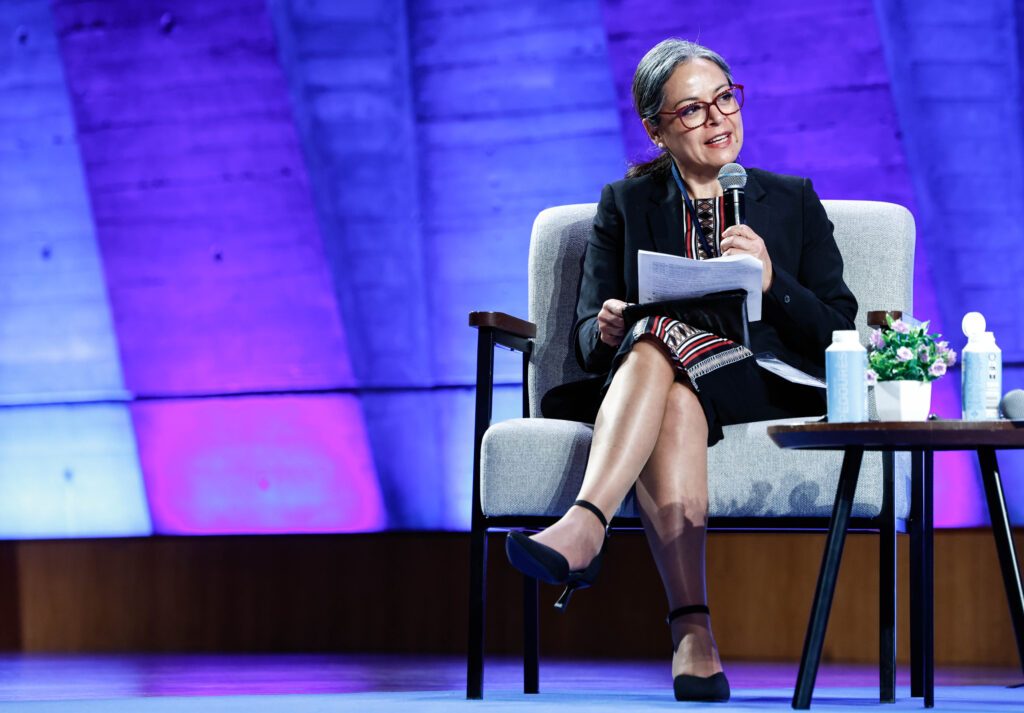
Among the experts present was MRI Executive Director Carolina Adler, serving as the World Meteorological Organization’s nominee to Co-Chair the IYGP2025 Advisory Board, alongside UNESCO Co-Chair Prof. John Pomeroy. As part of the official programme, they delivered a joint keynote and co-moderated a panel session marking the closing of the International Year.
Reflecting on her role, Adler noted: “It’s been a real honour and privilege to serve as the World Meteorological Organization’s Co-Chair to the IYGP2025 Advisory Board – a role that allowed me to connect the Year’s awareness raising goals with the engagement already seen in our community across science, policy, and practice, as well as the potential that still lies ahead… So, let’s continue that work to ensure the immense momentum generated translates into action and positive impact for our changing mountains’ cryosphere.”
From Awareness to Coordinated Action
The International Year of Glaciers’ Preservation succeeded in elevating glaciers as a global policy priority, strengthening science-policy linkages, and mobilizing hundreds of organizations worldwide. However, as emphasized throughout the event, the real challenge now lies ahead: translating awareness into sustained, coordinated action, that delivers on impact.
This urgency is reinforced by the latest findings in the WMO State of the Global Climate report (23 March 2026), which highlights that the Earth’s climate is increasingly out of balance, with accelerating cryosphere loss and far-reaching consequences for water and energy security, ecosystems, and communities.
A Defining Decade for Cryospheric Science
The newly launched Decade of Action for Cryospheric Sciences (2025–2034) aims to build on the momentum of IYGP2025 by advancing coordinated research, monitoring, and services. A key priority will be improving global cryosphere observations and ensuring that data are accessible, interoperable, relevant, and inclusive of diverse knowledge systems.
As WMO Secretary-General Celeste Saulo emphasized, this decade must be one of “consolidation and coordination,” moving beyond fragmented efforts toward integrated global approaches.
“Glaciers do not recognize borders. They sustain communities, agriculture, ecosystems, and economies across regions. To preserve these shared resources, we must work together.”
– WMO Secretary-General Celeste Saulo.
This call for collaboration reflects the very foundation of the MRI’s work: connecting researchers, knowledge systems, and regions to address complex mountain challenges.
Saulo also highlighted the critical importance of strengthening observation systems and data to support decision-making. Yet significant gaps remain, particularly in high mountain regions where monitoring infrastructure is sparse and existing data remains challenging to access and interoperationalise. Addressing these gaps will be essential for informed decision-making, from climate adaptation to disaster risk reduction.
Making Connections for Our Changing Mountains
The challenges facing the cryosphere are complex and transboundary, but so too are the solutions. As glaciers, snow, and ice continue to diminish, and risks intensify, the need for strong scientific collaboration and coordinated action has never been greater.
The MRI remains committed to supporting this effort by strengthening the global mountain research network, advancing knowledge exchange, and connecting science with policy and practice. The ongoing work of the MRI Working Groups – including our Social-Ecological Mountain Futures Working Group – is one of many ways that the MRI is demonstrating this commitment, exploring options for adaptation and resilience in a post-glacial context. Complementary contributions aligned with these objectives were also identified as part of the outcomes of the 14th Session of the WMO Panel on Polar and High-Mountain Observations, Research and Services (PHORS-2026), held Wellington, New Zealand 9-13 February 2026, with the MRI’s Carolina Adler in attendance.
As the community moves into this decisive decade, the message from Paris is clear: protecting glaciers is not only about ice – it is about water, energy, ecosystems, safety, and the future of millions. And it is a responsibility shared by us all.
Cover photo: Carolina Adler co-moderating a panel session alongside John Pomeroy to mark the closing of the International Year of Glaciers’ Preservation 2025 at UNESCO HQ. Photo credit: UNESCO I Marie Etchegoyen.