
A new, MRI co-authored regional policy brief finds that the South Caucasus is approaching a critical threshold in the loss of its snow and ice, with far-reaching consequences for water supply and hazard risk. The report calls for urgent improvements in monitoring, data governance, and climate adaptation to safeguard the region’s future.
• Region is home to some of the world’s fastest-melting glaciers, crucial to the water cycle.
• Between 2000 and 2020, glaciers were decimated by 77% in Azerbaijan and 24% in Georgia.
• Stronger monitoring, data sharing, and climate adaptation needed.
Glaciers in the South Caucasus are melting faster than in almost any other mountain region on Earth, posing a threat to water security and increasing the risk of natural hazards. This is according to a new policy brief released on International Mountain Day 2025. Developed under the Regional Adaptation Dialogue in the South Caucasus (RADISC), co-hosted by the United Nations Environment Programme (UNEP) and the Mountain Research Initiative (MRI), the brief provides the most up-to-date regional assessment of the state of snow and ice and outlines urgent actions needed to strengthen monitoring and adaptation.
The policy brief, Melting Heritage: Adapting to a Changing Snow and Ice Cover in the South Caucasus, consolidates recent scientific evidence and national data to assess shrinking snow and ice cover; reviews existing monitoring systems and data governance structures; identifies national policies and ongoing adaptation efforts; and offers targeted recommendations to bolster regional cooperation and preparedness. It also underscores the need for stronger advocacy for communities already affected by climate-related changes in mountain environments.
Across the region, glaciers lost over 23% of their total area between 2000 and 2020. The decline was especially dramatic in Azerbaijan, where glaciers shrank by 77%, and in Georgia, where glacier area has decreased by 24%. In Armenia, where glaciers have fully disappeared, the duration of seasonal snow cover has shortened by 11 days since 2000, while average snow depth has fallen by 3 cm.
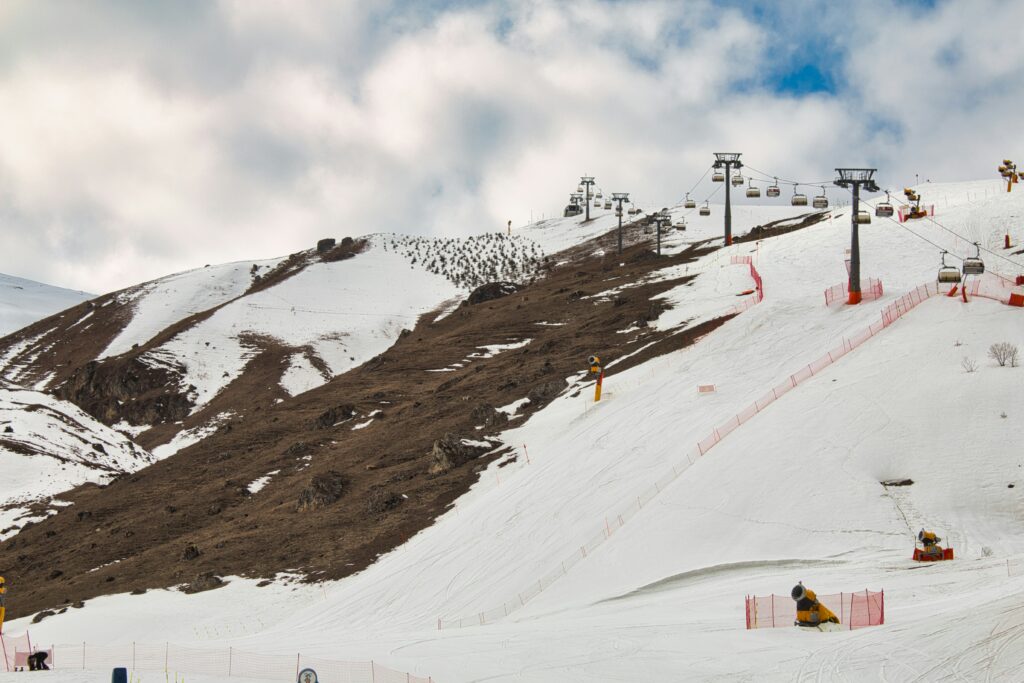
The policy brief highlights that if global warming is limited to the Paris Agreement target of 1.5 degrees Celsius by 2100 compared to pre-industrial times, around 40% of the region’s glacial mass could still be preserved. But under a 3-degree warming trajectory, most glaciers in the South Caucasus are expected to vanish by the end of the century. UNEP’s 2025 Emissions Gap Report finds the world is currently on track for 2.3–2.5 degrees Celsius of warming if existing pledges on emissions cuts are fulfilled.
“The South Caucasus is one of the regions experiencing changes in the cryosphere,” said UNEP Europe Director Arnold Kreilhuber. “UNEP is committed to working with all partners to improve monitoring, support water security efforts, and help protect communities and ecosystems.”
Risk of water insecurity and hazards
The region’s snow, ice and permafrost are vital to the entire water cycle. Meltwater from mountains replenishes rivers and sustains ecosystems, drinking water, agriculture, industry, and more. Disruption of the cryosphere means that the risk of water insecurity increases during summer droughts. Groundwater withdrawals have already doubled in Armenia and increased four-fold in Azerbaijan since 2000, the brief finds.
Once glacier loss reaches a tipping point, known as ‘peak water,’ the glaciers’ contribution to river discharge will decline, leading to increased water scarcity at local, national, and regional levels.
Continued glacier retreat will also intensify mountain hazards, including floods, landslides, rockfall, and ice avalanches. The fatal 2023 avalanche and debris flow in Shovi, Georgia, is cited as a stark example of the region’s vulnerability.
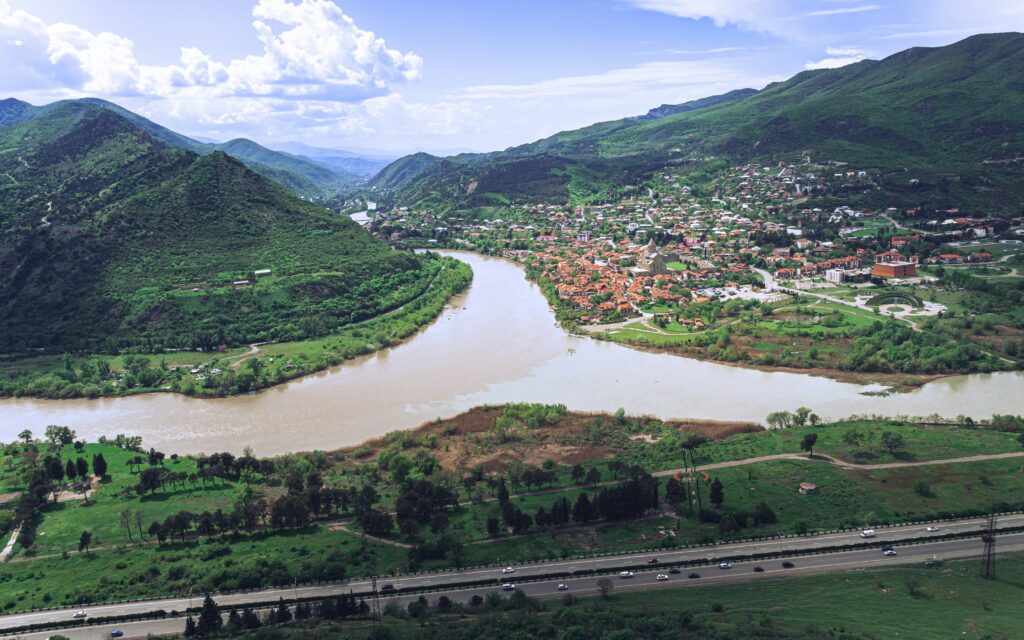
Some of its tributaries are fed by snow and small glaciers and are affected by changing seasonal runoff patterns. Mtskheta, Georgia.
Photo by Vitya Lapatey.
Monitoring gaps and regional cooperation
The brief notes that free and open access to snow and ice data remains limited across the South Caucasus, while no regional permafrost or glacial lake monitoring systems exist. Strengthening data governance and establishing shared monitoring frameworks are among its core recommendations. The brief also calls for countries’ climate policies and adaptation plans to explicitly account for snow and ice loss.
The policy brief was produced as a regional output of RADISC, co-hosted in May 2025 in Stepantsminda, Georgia, by UNEP and the Mountain Research Initiative, and managed as part of the Adaptation at Altitude programme. Both RADISC and the new brief contribute to regional engagement in the United Nations International Year of Glaciers’ Preservation 2025 and the Five-Year Action Plan for the Development of Mountain Regions 2023–2027.
Citation: Adaptation at Altitude Programme (2025). Melting Heritage: Adapting to changing snow and ice cover in
the South Caucasus. Regional Policy Brief. Edited by UN Environment Programme, Mountain Research
Initiative and Sustainable Caucasus. Nairobi, Bern and Tbilisi: https://doi.org/10.48620/89753.
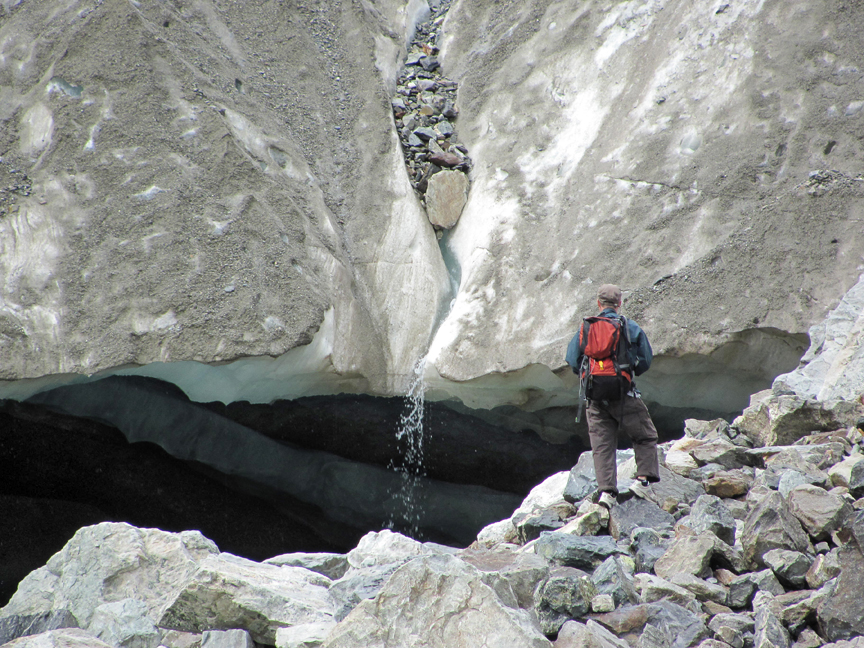
Cover image: Chalaadi Glacier, Georgia. The Glacier is one of the largest glaciers in the Greater Caucasus and has experienced substantial ice loss. Between 1810 and 2018, its area decreased by 34%, and it shortened by 2.3 kilometers (Tielidze et al., 2020). Image credit: Amy Nelson, CC BY 2.0 https://creativecommons.org/licenses/by/2.0, via Wikimedia Commons.