
At the Banff Centre Mountain Film and Book Festival’s Fire and Ice Symposium, MRI SLC Member Ignacio Palomo contributed to key conversations on adaptation and the power of narrative in a warming world.
During the Banff Centre Mountain Film and Book Festival earlier this month, MRI Science Leadership Council member Ignacio Palomo – a researcher at the French National Research Institute for Sustainable Development (IRD) – joined a diverse gathering of scientists, artists, adventurers, and knowledge-keepers for the Festival’s special 50th-anniversary event: the Fire and Ice Symposium – The Stories We Tell. The symposium invited participants to explore how storytelling can help inspire action and hope in the face of cascading environmental change, seen through the lens of melting ice and increasing wildfire.
Designed for scientists, science communicators, filmmakers, mountain guides, and organizations and community members concerned about our changing climate, the symposium combined keynote presentations with interactive breakout sessions. Attendees were encouraged not only to listen, but also to exchange insights on how best to communicate the future of fragile mountain landscapes.
Living Through Change: How Can We Adapt?
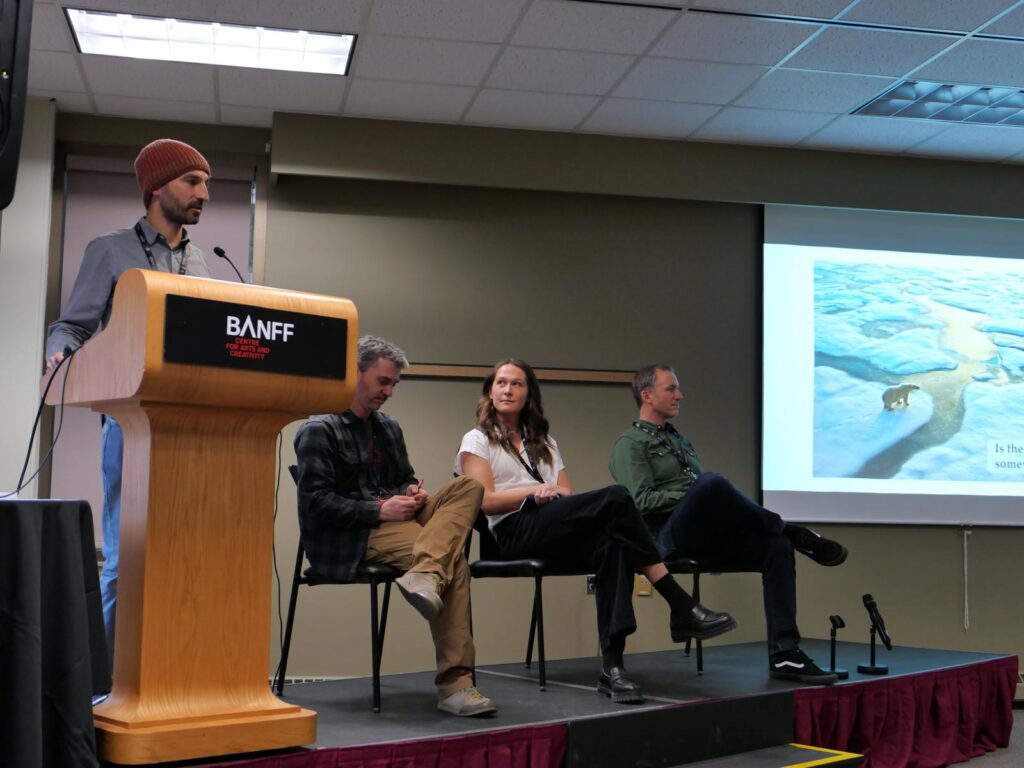
Ignacio Palomo took part in the afternoon session Living Through Change, moderated by Graham McDowell. This session focused on one of the most pressing questions facing mountain regions today: How do we adapt to a world in which ice is rapidly disappearing?
Alongside fellow panellists Kate Hanley and Marc Pons, Palomo contributed perspectives from his work on how various stakeholder types live and adapt to glacier loss in tropical mountains. The panel explored what adaptation looks like on the ground for mountain communities, how to communicate necessary changes without losing sight of positive emotions such as care and hope, and how storytelling can offer both clarity and motivation at a time when uncertainty is increasing.
This discussion also benefited from insights gathered in Palomo’s recent book, The Voices of Glaciers: Stories of Grief and Hope Amidst Shrinking Glaciers in the Tropics. The book – which was co-authored by Sofia Lana, Antoine Rabatel, and Oliver Dangles, among other colleagues – was published earlier this year by UNESCO and the French Research Institute for Sustainable Development (IRD), with support from the MRI. A moving testimony to the ecological, economic, cultural, and spiritual significance of glaciers, The Voices of Glaciers has already reached audiences around the world and has been presented at major venues including UNESCO headquarters in Paris and the National Museum of Ecuador.
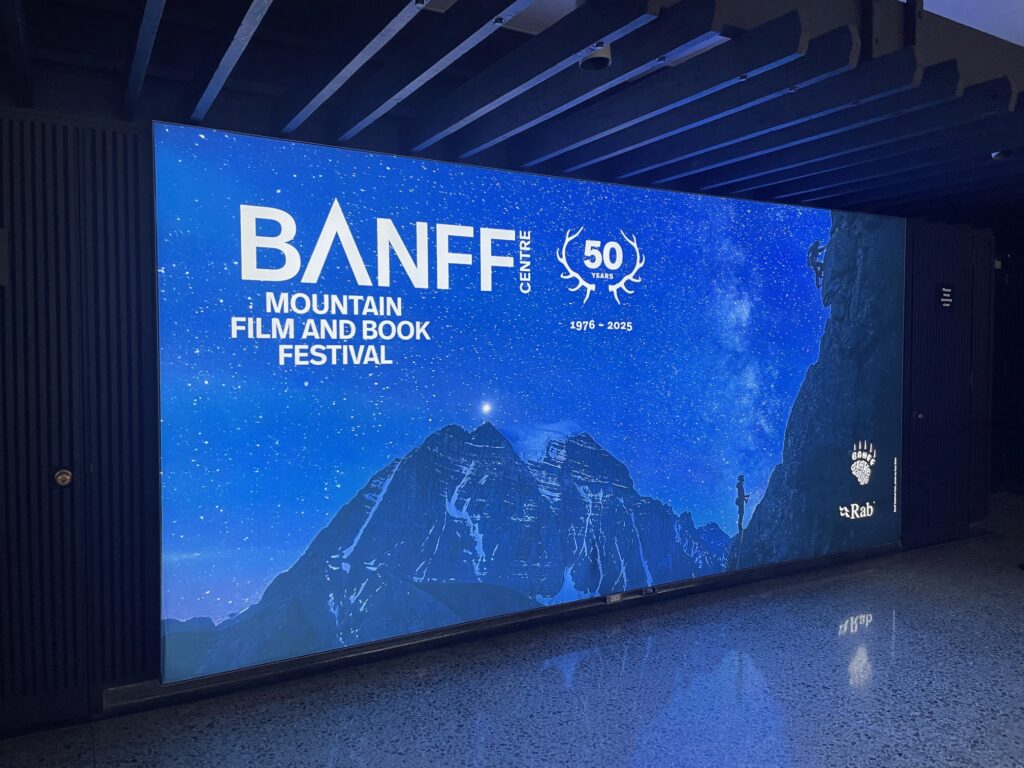
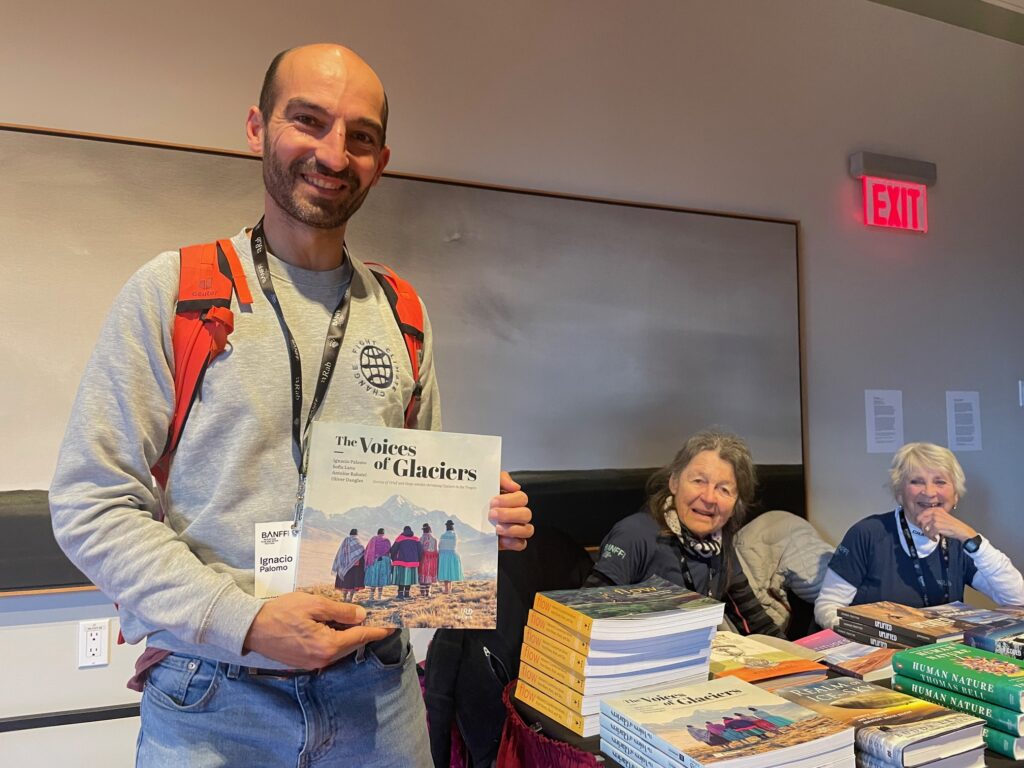
Pictured: Impressions from the Banff Festival. Image credit: Ignacio Palomo.
Amplifying Human Stories of Ice Loss
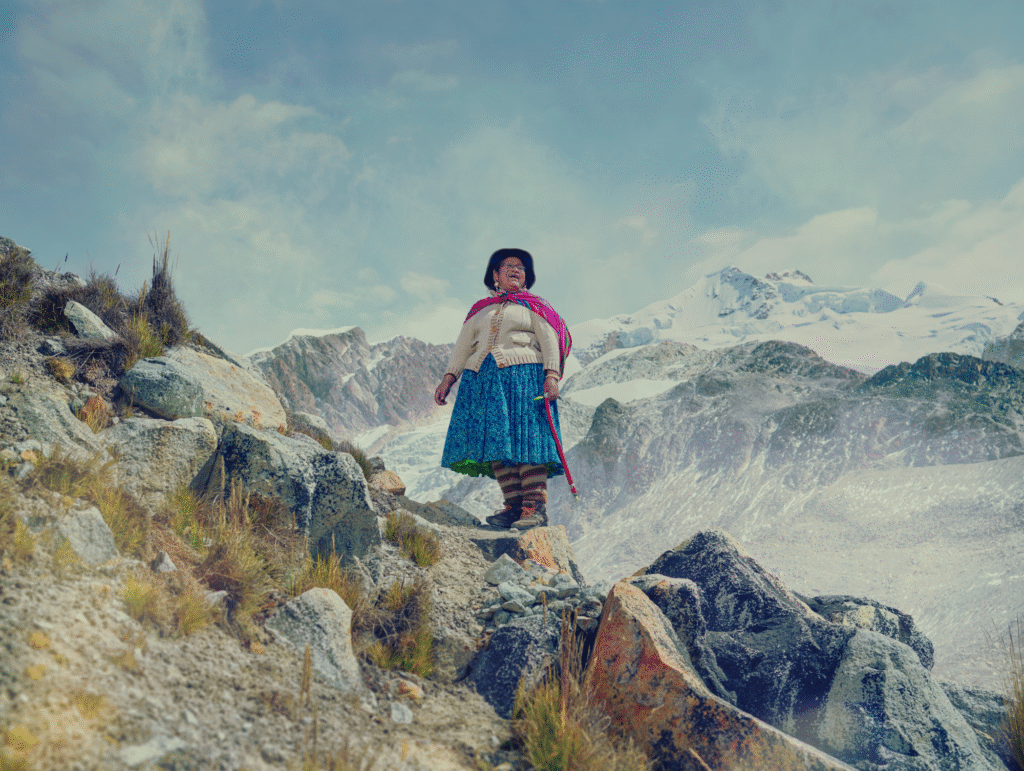
The Voices of Glaciers brings together the reflections of 35 contributors whose lives and work are intertwined with glaciers in the Andes, East Africa, and Southeast Asia. These testimonies – ranging from Indigenous elders and mountain guides to scientists, artists, rangers, and young activists – offer an intimate window into what the disappearance of tropical glaciers means for cultures, livelihoods, water security, and emotional worlds.
“From the first time I opened my eyes, I saw glaciers reaching all the way down from the summits to the valleys. Since the 2000s, I can see how much the snow is retreating.”
– Reflections from Liz Macedo, Flores caretaker for mountain huts in the Andes, in The Voices of Glaciers.
These lived experiences are paired with scientific findings that paint an equally stark picture. The Andes have already lost between 30 and 50 percent of their glacier mass since the 1980s, and many of the tropical glaciers documented in the book may vanish entirely by 2050. Yet the book is not solely a chronicle of loss. Through stories of adaptation, cultural memory, intergenerational connection, and resilience, it extends an invitation to think differently about the relationship between people and ice.
As Palomo writes in The Voices of Glaciers: “We propose thinking about each of the voices in this book as a different vantage point and emotional world from which to perceive melting tropical glaciers. All have lived experiences that shape their perceptions and knowledge, and we acknowledge the diversity of their worlds and world-making practices, while using emotion as a point of encounter.”
Sharing Knowledge, Inspiring Action
The Banff Fire and Ice Symposium provided a fitting platform for The Voices of Glaciers – uniting scientific insight with storytelling, and exploring the profound human dimensions of a rapidly changing climate and diminishing cryosphere.
As the world marks the International Year of Glaciers’ Preservation 2025 and the Decade of Action for Cryospheric Sciences (2025–2034), these conversations and stories serve as a reminder that protecting glaciers and adapting to their loss is also about honouring the cultures, histories, and knowledge systems shaped by them.
_______________________________________
Citation: Palomo I., Lana S., Rabatel A., Dangles O. 2025. The Voices of Glaciers: Stories of Grief and Hope Amidst Shrinking Glaciers in the Tropics. With the collaboration of Cauvy-Fraunié S., Ceballos J. L., Adler C., Mark B., Marchant R.,Morales Arnao B., Pérez Arias J. D., Aguilar Durán D. & Zimmer A. Marseille-Paris, IRD Éditions-UNESCO.
The Voices of Glaciers was published with the support of The Mountain Research Initiative (MRI), Life Without Ice (LWI) funded by BNP Paribas, L’Institut des géosciences de l’environnement (IGE), and L’Observatoire des sciences de l’univers de Grenoble (OSUG).
While initially printed in English, other language editions are currently in development.
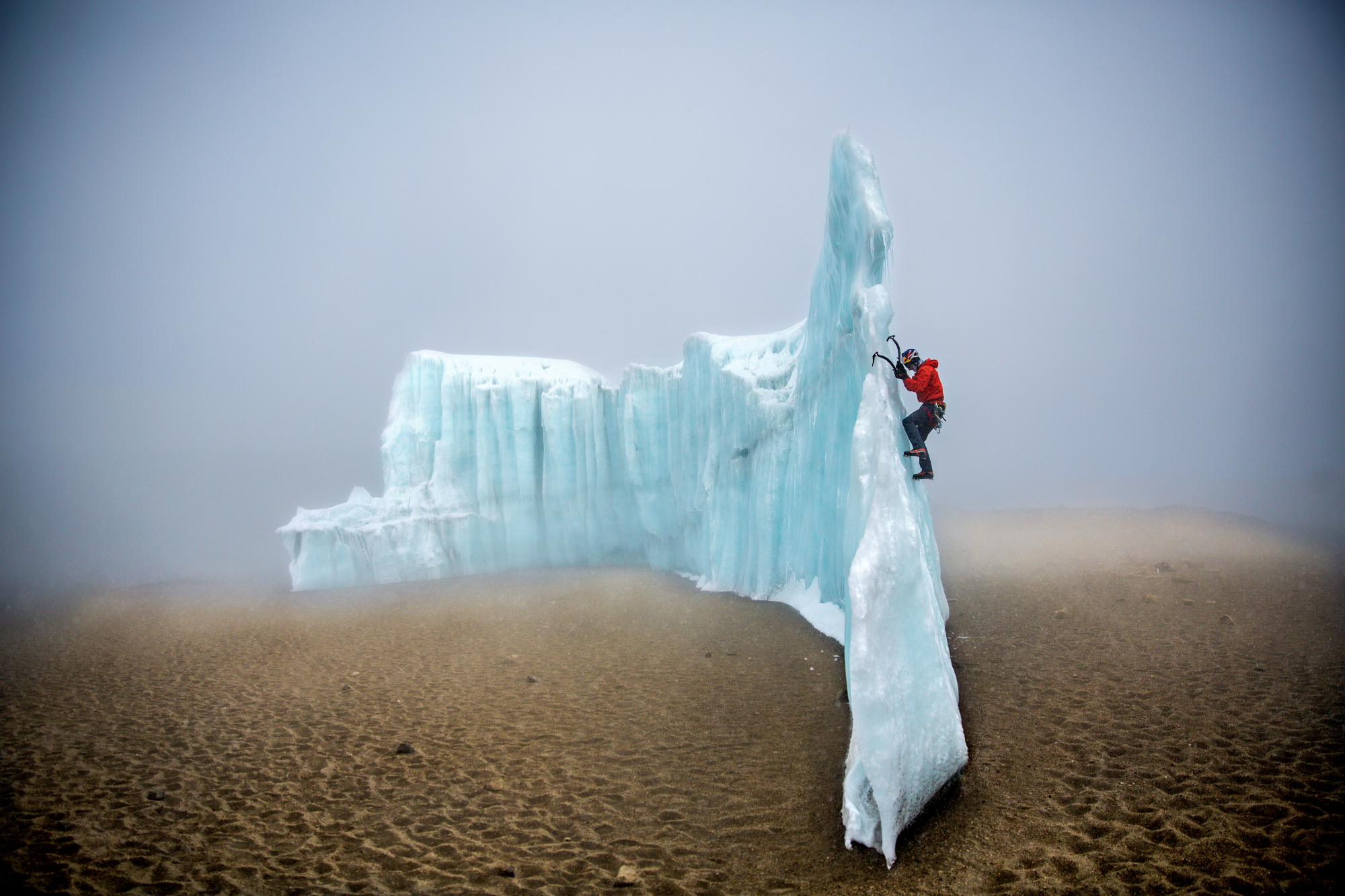
Cover image: “We need to make people excited about the possibilities to engage with climate change.” Ice climber and adventurer Will Gadd climbs a chunk of ice on Mount Kilimanjaro. Gadd is one of the individuals featured in The Voices of Glaciers. Image credit: C. Pondella.