
How can glacier research better address questions of responsibility, inequality, and human well-being in a warming world? According to MRI Science Leadership Council member Mark Carey, one answer lies in developing a ‘glacier forensics’ approach.
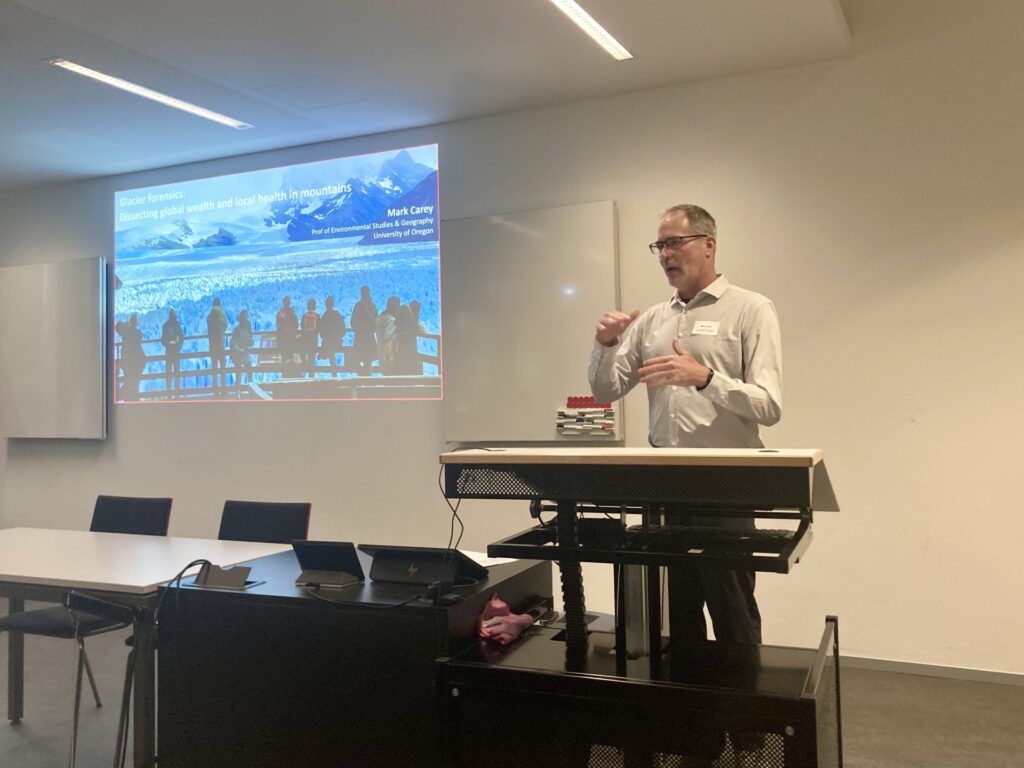
Mark Carey, Professor of Environmental Studies and Geography at the University of Oregon, presented the idea of ‘glacier forensics’ during his keynote lecture at Cold Altitudes: Knowledge, Imagination, and Experiences of Mountain Ice, an international conference held at the University of Fribourg, Switzerland, 11–12 May 2026.
The conference brought together scholars from across the humanities and social sciences to explore how societies have understood, represented, inhabited, and transformed mountain ice – including glaciers, snowfields, and avalanche landscapes. Carey’s keynote, ‘Glacier Forensics: Dissecting Global Wealth and Local Health in Mountains,’ challenged researchers to broaden the scope of mountain and glacier studies by engaging more directly with questions of wealth, health, environmental justice, and responsibility.
Looking Beyond Glacier Loss
Carey argued that two critical dimensions remain relatively underdeveloped within mountain social science and humanities research: rising wealth disparities and global health concerns.
As glaciers retreat in both polar and mountain regions, new economic opportunities are emerging in deglaciated landscapes, including those related to mining, energy development, data centres, and expanding infrastructure networks. Carey urged researchers to examine these economic dimensions more closely, including the extraction, flows, networks, and patterns of consumption that shape mountain regions and connect them to global systems of power and capital.
At the same time, Carey called for greater attention to health and well-being within glacier research. He noted that even social science studies of glaciers often overlook the basic dimensions of everyday life, such as access to clean freshwater, food security, housing, healthcare, accessible energy, and employment. Placing these concerns at the centre of glacier research, he argued, is essential for understanding how climate change affects communities living with and around mountain ice.
From Impacts to Accountability
A central theme of the keynote was the need for more explicit environmental justice approaches in mountain and glacier regions. To address this, Carey proposed the idea of ‘glacier forensics’ as a way to move beyond documenting the impacts of glacier retreat and instead ask deeper questions about responsibility. Drawing inspiration from climate attribution science, Carey suggested that glaciers can be understood as ‘crime scenes,’ where the drivers of climate change and ice loss should be identified, rather than treating glacier melt only as a natural or inevitable process to which communities must adapt.
This approach builds on Carey’s earlier call for ‘glacier autopsies,’ which sought to go beyond grief over disappearing glaciers by asking not only how glaciers are changing, but why, and who is responsible. His keynote invited mountain researchers to engage more directly with questions of rights, including water rights, Rights of Nature, and the growing influence of political forces that shape environmental governance and resource access.
Advancing New Directions in Mountain Research
Through his intervention, Carey encouraged researchers to develop a more justice-oriented research agenda for mountain ice: one that connects glacier change to global economic inequality, local health, and accountability for the social and environmental consequences of a warming world.
As mountain environments continue to change rapidly, such perspectives highlight the value of interdisciplinary approaches that can deepen understanding of both the drivers and consequences of glacier loss for mountain communities and beyond.
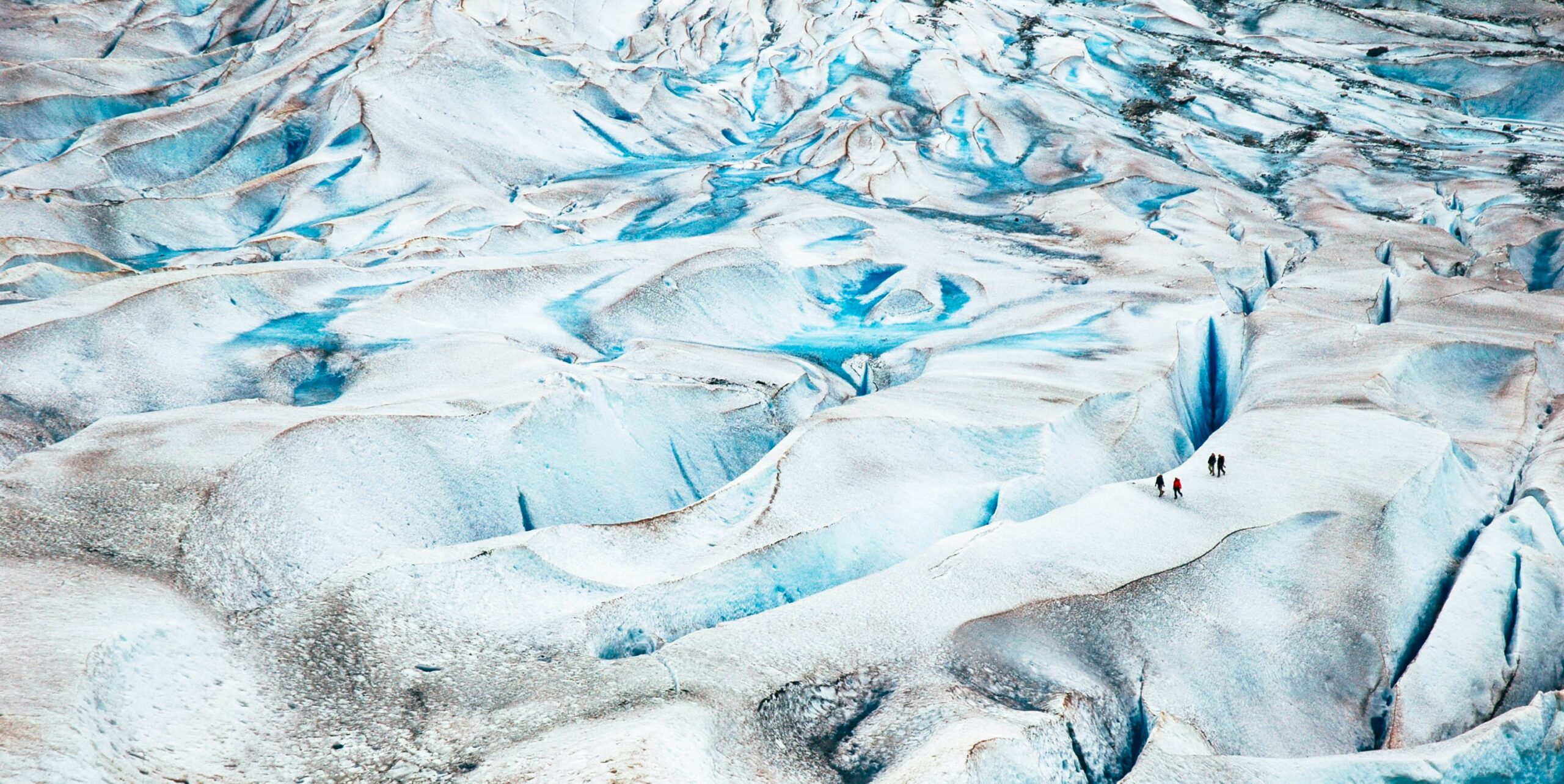
Cover photo by Kyson Dana.